

Bunion Correction Methods: How Surgeons Choose the Right Procedure
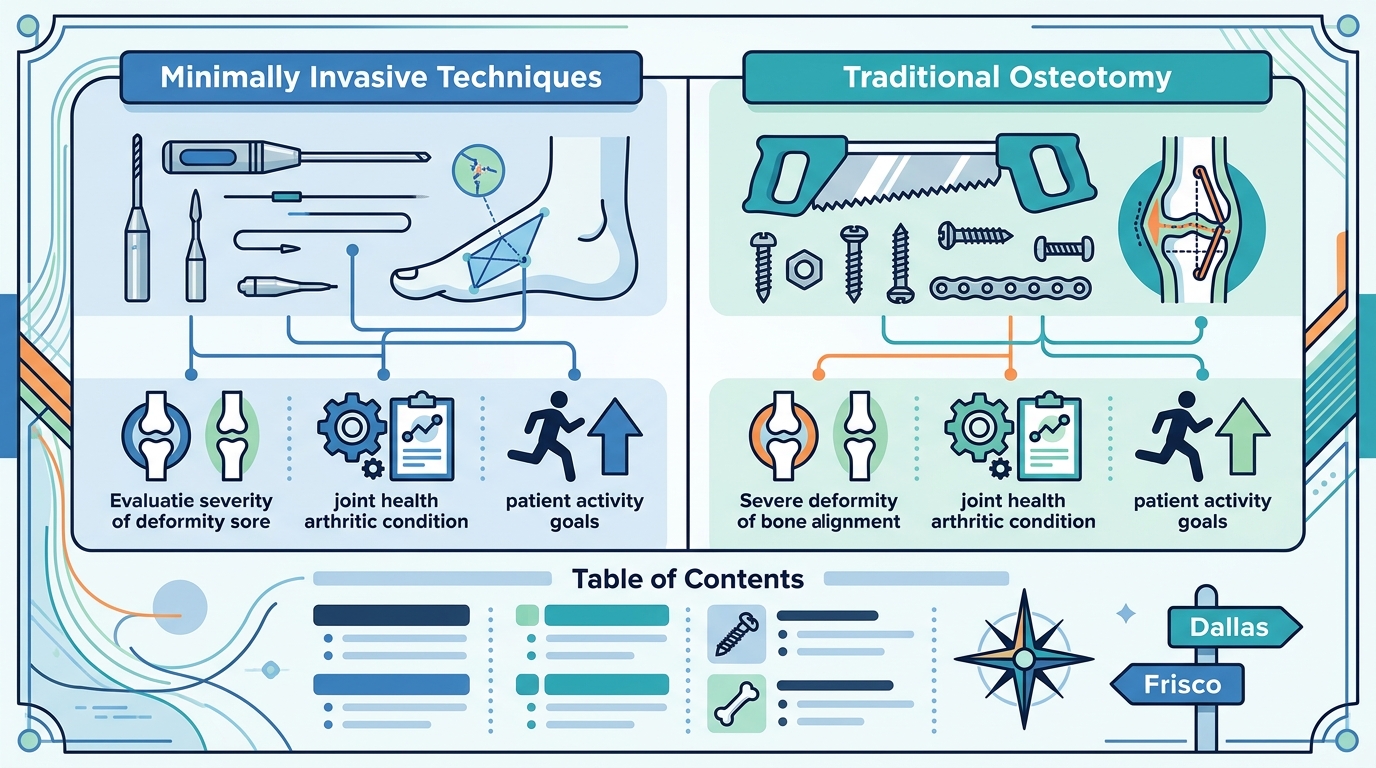
Surgeons select bunion correction methods based on the specific bone deformity, joint health, and patient activity goals. At Leroy Butler, DO PLLC, foot and ankle fellowship-trained surgeons in Dallas and Frisco evaluate these factors to determine if a minimally invasive technique or a traditional osteotomy is the safest path to long-term stability and pain-free movement.
Understanding the Anatomy of a Bunion
A bunion, or hallux valgus, is a progressive deformity where the big toe angles toward the second toe, causing a bony prominence on the inner side of the foot. This condition is not merely a cosmetic issue; it alters the biomechanics of the entire foot, leading to pain, calluses, and difficulty finding footwear. The severity of the deformity is measured by the hallux valgus angle and the intermetatarsal angle, which dictate the surgical approach.
Why the Angle Matters
The degree of deviation determines which bones need to be realigned. A mild deformity might only require a soft tissue adjustment, while a severe deformity involves significant bone repositioning. Surgeons use these measurements to predict how the foot will function after surgery.
Minimally Invasive Bunion Surgery (MIS)
Minimally invasive bunion surgery is a technique that uses small incisions to correct the deformity with less tissue disruption. This method is ideal for patients with mild to moderate deformities who want a faster return to normal activities. The smaller incisions result in less postoperative pain and swelling compared to traditional open surgery.
When MIS is the Right Choice
MIS is best suited for younger, active patients with good bone quality and no significant arthritis in the joint. It preserves the natural anatomy of the foot while correcting the alignment. Patients often return to work within a few days, though full recovery still takes several weeks.
Traditional Osteotomy Techniques
Chevron vs. Scarf Osteotomy
The Chevron osteotomy is a V-shaped cut used for moderate deformities, offering excellent stability. The Scarf osteotomy is a Z-shaped cut that allows for more extensive correction of severe deformities. The choice between these two depends on the specific geometry of the patient's foot and the surgeon's preference.
Advanced Procedures for Severe Deformities
For severe, rigid bunions or those with significant arthritis, more advanced procedures are required. These include the Lapidus procedure, which fuses the first metatarsal to the cuneiform bone, and total ankle replacement in extreme cases. These procedures are more complex and require a longer recovery period but offer the most durable results for complex cases.
The Role of Arthrodesis
Arthrodesis, or joint fusion, is a procedure that permanently fuses the joint to eliminate pain. It is typically reserved for patients with severe arthritis or failed previous surgeries. While it limits motion, it provides a stable, pain-free foundation for walking.
How Surgeons Choose the Right Method
Surgeons choose the right bunion correction method by combining imaging studies, physical examination, and patient goals. At Leroy Butler, DO PLLC, the decision is made after a thorough evaluation of the foot's structure and the patient's lifestyle. The goal is to restore function and comfort, not just to straighten the toe.
Factors Influencing the Decision
Key factors include the patient's age, activity level, and presence of arthritis. A young athlete may benefit from a motion-preserving osteotomy, while an older patient with arthritis may be better served by a fusion. The surgeon's expertise and experience with specific techniques also play a crucial role in the outcome.
Recovery and Long-Term Outcomes
Recovery from bunion surgery varies depending on the procedure performed. Minimally invasive techniques typically allow for a faster return to light activities, while traditional osteotomies and fusions require a longer period of immobilization. Long-term outcomes are generally excellent, with most patients reporting significant pain relief and improved function.
What to Expect During Recovery
Patients can expect some swelling and discomfort in the first few weeks. Physical therapy may be recommended to restore strength and flexibility. Following the surgeon's instructions is critical to achieving the best possible result.
Key Takeaways
- Bunion correction methods range from minimally invasive techniques to traditional osteotomies and joint fusions.
- The choice of procedure depends on the severity of the deformity, joint health, and patient goals.
- Minimally invasive surgery is ideal for mild to moderate deformities in active patients.
- Traditional osteotomies like Chevron and Scarf are used for moderate to severe deformities.
- Advanced procedures like Lapidus and arthrodesis are reserved for severe, rigid bunions or arthritis.
- Surgeons use imaging and physical exams to tailor the treatment plan to each patient.
- Recovery times vary, but most patients achieve long-term pain relief and improved function.
Frequently Asked Questions
What is the most common bunion surgery?
The most common bunion surgery is the osteotomy, which involves cutting and realigning the bone. The specific type of osteotomy depends on the severity of the deformity.
How long does bunion surgery recovery take?
Recovery from minimally invasive bunion surgery can be as short as a few weeks, while traditional osteotomies and fusions may take several months. Full recovery depends on the procedure and individual healing.
Can bunion surgery be done on both feet at once?
Yes, bunion surgery can be performed on both feet simultaneously. This is often done to avoid two separate recovery periods, though it may increase initial swelling and discomfort.
What are the risks of bunion surgery?
Is bunion surgery painful?
While the surgery itself is performed under anesthesia, postoperative pain is common. Pain management plans are provided to ensure comfort during recovery.
How do I know if I need bunion surgery?
You may need bunion surgery if conservative treatments like orthotics and pain medication no longer provide relief. A consultation with a foot and ankle specialist can help determine if surgery is the right option.
Conclusion
Choosing the right bunion correction method is a personalized process that requires expert evaluation. At Leroy Butler, DO PLLC, our fellowship-trained surgeons in Dallas and Frisco provide comprehensive care tailored to your unique anatomy and goals. If you are experiencing bunion pain, to schedule a consultation and explore your treatment options.