

Platelet-rich plasma (PRP) therapy works by concentrating the body's own healing factors to stimulate tissue repair and reduce inflammation in the knee. At Leroy Butler, DO PLLC, we use this regenerative approach to help patients with knee osteoarthritis manage pain and improve function without the risks associated with synthetic implants or long-term medication use.
The Biological Mechanism of PRP
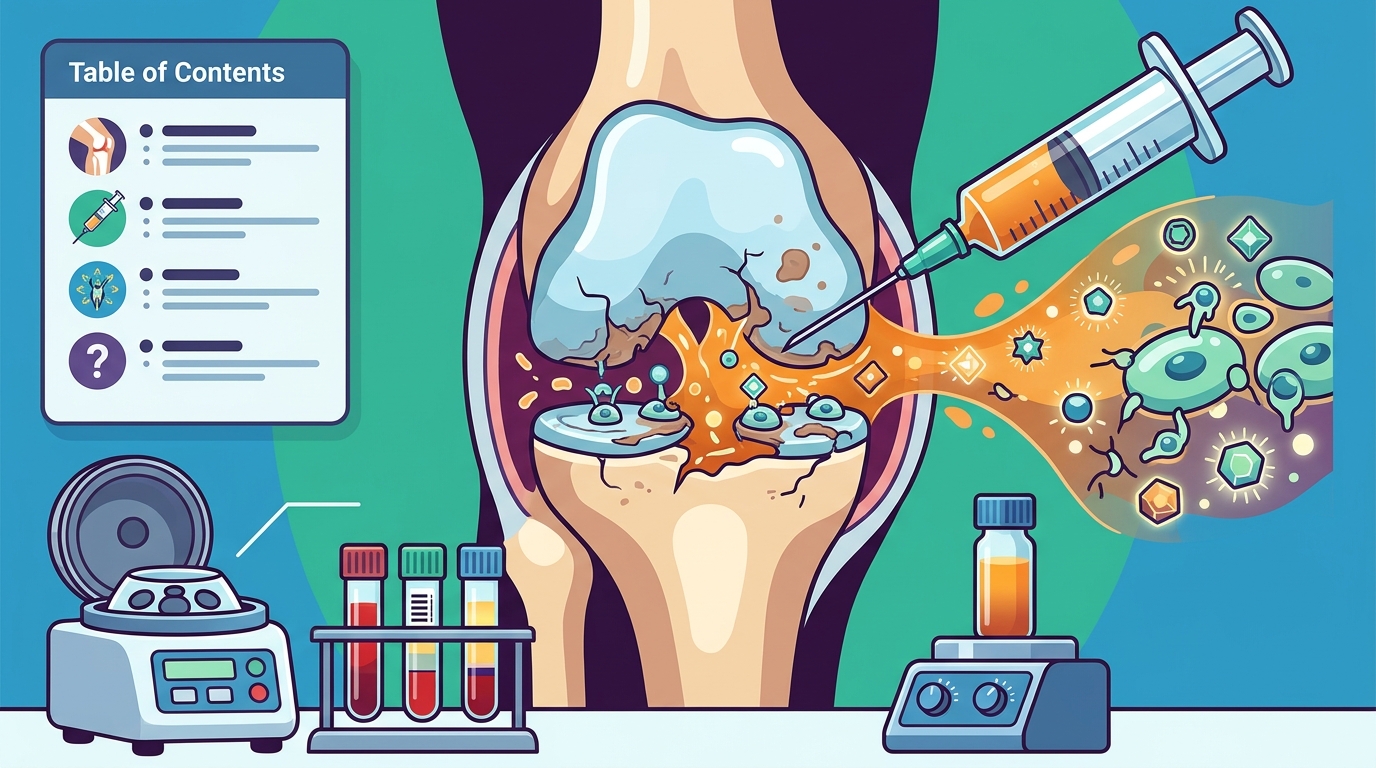
Platelet-rich plasma is a concentrated solution of platelets derived from the patient's own blood. When injected into a damaged joint, these platelets release growth factors that signal surrounding cells to begin the healing process. This biological cascade is the primary driver of the therapy's effectiveness.
Key Growth Factors and Their Roles
- PDGF: Stimulates the proliferation of chondrocytes, the cells responsible for maintaining cartilage.
- TGF-beta: Promotes the synthesis of extracellular matrix components, such as collagen and proteoglycans.
- VEGF: Enhances local blood supply, which is critical for delivering nutrients to the joint area.
By leveraging these natural signals, PRP therapy aims to shift the joint environment from a state of chronic inflammation to one of active repair.
Cartilage Regeneration and Matrix Synthesis
Research indicates that PRP can increase the production of type II collagen, a primary structural component of healthy cartilage. This increase helps to restore the mechanical properties of the joint surface. The goal is not necessarily to grow a new layer of cartilage from scratch, but to improve the quality and resilience of the existing tissue.
For patients at Leroy Butler, DO PLLC, understanding this distinction is important. The therapy focuses on optimizing the biological environment so that the knee can better withstand daily stress.
Modulating Inflammation in the Joint
Inflammation modulation is the process of reducing the chronic inflammatory response that characterizes osteoarthritis. PRP contains anti-inflammatory cytokines that help to balance the pro-inflammatory signals present in the joint fluid. This reduction in inflammation is a major contributor to the pain relief many patients experience.
Studies have shown that PRP can decrease the levels of inflammatory markers such as interleukin-1 (IL-1) and tumor necrosis factor-alpha (TNF-alpha). By lowering these markers, the therapy helps to create a more stable environment for the joint. This stability is essential for long-term functional improvement.
The anti-inflammatory effect of PRP is often more sustained than that of traditional corticosteroid injections. While steroids provide rapid but temporary relief, PRP works to address the underlying biological drivers of the pain.
Clinical Evidence and Patient Outcomes
Clinical evidence for PRP therapy in knee osteoarthritis has grown significantly over the past decade. Multiple randomized controlled trials have demonstrated that PRP can provide significant improvements in pain scores and functional ability. These outcomes are often comparable to, or better than, those seen with hyaluronic acid injections.
A notable study published in a peer-reviewed journal found that patients who received PRP injections reported a 50% reduction in pain levels at six months. This level of improvement is clinically significant and can allow patients to return to activities they had previously avoided. The durability of these results is a key advantage of the therapy.
At Leroy Butler, DO PLLC, we evaluate each patient's specific condition to determine if they are a good candidate for PRP. The therapy is most effective for patients with mild to moderate osteoarthritis who are looking for a non-surgical option.
Safety Profile and Treatment Considerations
Because PRP is derived from the patient's own body, there is no risk of disease transmission or rejection. This makes it a safe option for a wide range of patients, including those who may have contraindications for other types of injections. The procedure is typically performed in an outpatient setting and requires minimal recovery time.
Patients should discuss their medical history with their provider to ensure that PRP is an appropriate choice. Factors such as blood clotting disorders or active infections may affect eligibility for the treatment.
Key Takeaways
- PRP therapy works by concentrating the body's own platelets to release healing growth factors.
- PRP modulates inflammation by reducing pro-inflammatory cytokines in the joint fluid.
- Clinical studies show that PRP can provide significant and durable pain relief for knee osteoarthritis.
- The treatment is generally safe due to its autologous nature, with minimal risk of adverse reactions.
- PRP is most effective for patients with mild to moderate osteoarthritis seeking non-surgical options.
Frequently Asked Questions
How long does it take for PRP therapy to work?
Most patients begin to notice improvements in pain and function within two to four weeks after the injection. The full benefits of the therapy may take several months to manifest as the biological healing process continues.
Is PRP therapy a cure for osteoarthritis?
PRP therapy is not a cure for osteoarthritis, but it can significantly improve symptoms and slow the progression of the disease. It is a management tool that helps patients maintain function and reduce pain.
How many PRP injections are needed?
The number of injections required varies by patient. Some patients may benefit from a single injection, while others may require a series of treatments. Your provider will develop a personalized plan based on your specific condition.
Does PRP therapy hurt?
The injection itself is typically well-tolerated, especially when performed with local anesthesia. Some patients may experience mild soreness or swelling at the injection site for a few days after the procedure.
Who is a good candidate for PRP therapy?
Good candidates for PRP therapy are patients with mild to moderate knee osteoarthritis who are looking for a non-surgical option. Patients with severe bone-on-bone arthritis may not be ideal candidates for this treatment.
Conclusion
PRP therapy offers a biologically sound approach to managing knee osteoarthritis by leveraging the body's own healing mechanisms. By stimulating cartilage repair and modulating inflammation, this treatment can provide meaningful improvements in pain and function. For patients in the Dallas and Frisco areas, Leroy Butler, DO PLLC provides expert evaluation and personalized care to help you determine if PRP is the right choice for your knee health.