

Recovery Timeline After Total Ankle Replacement Surgery
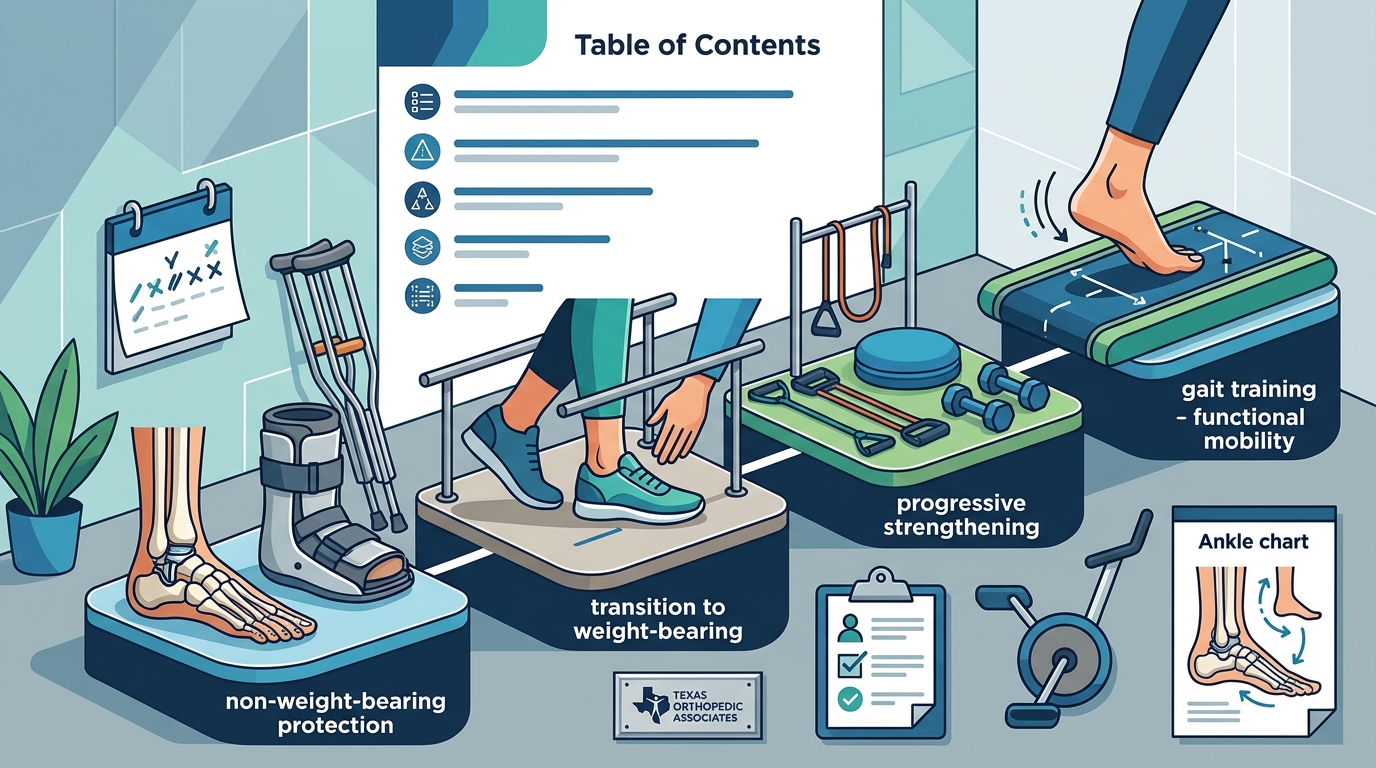
Recovery from total ankle replacement surgery typically spans six to twelve months, with the most critical physical therapy phases occurring in the first eight weeks. Patients generally transition from non-weight-bearing protection to full weight-bearing between weeks four and six, followed by progressive strengthening and gait training. At Leroy Butler, DO PLLC, our focus is on structured, evidence-based rehabilitation to ensure the joint heals correctly and functionally.
Phase 1: Protection and Inflammation Control (Weeks 0-4)
The initial phase prioritizes protecting the surgical site and managing swelling. Total ankle replacement is a procedure that replaces the damaged joint surface with a prosthetic implant, requiring strict adherence to weight-bearing restrictions. During the first two weeks, patients are typically non-weight-bearing, using crutches or a knee scooter to protect the incision and allow the bone to begin healing around the implant. Swelling is a normal part of the healing process, but aggressive management is essential to prevent stiffness.
Physical therapy in this phase focuses on gentle range-of-motion exercises for the toes and knee, while the ankle itself remains immobilized in a splint or boot. The goal is to maintain circulation and prevent deep vein thrombosis without stressing the surgical repair. Patients should expect significant discomfort and swelling during this period, which gradually subsides as the acute inflammatory phase resolves.
Phase 2: Transition to Weight-Bearing (Weeks 4-8)
Between weeks four and six, most surgeons transition patients to partial weight-bearing, followed by full weight-bearing in a protective boot. This transition is the most critical juncture in the recovery timeline. The implant must be securely fixed to the bone before it can withstand the forces of walking. Premature weight-bearing can lead to implant loosening or failure, so adherence to the surgeon's specific protocol is non-negotiable.
During this phase, physical therapy introduces active-assisted range-of-motion exercises. Patients begin to move the ankle through its available arc while still protected by the boot. The focus shifts from passive movement to active muscle engagement. By week eight, many patients are walking with a normal gait pattern, though they may still experience stiffness and residual swelling. This phase establishes the foundation for functional mobility.
Phase 3: Strengthening and Gait Training (Weeks 8-12)
Patients typically transition from the protective boot to regular footwear during this phase. This transition requires careful management to avoid tripping or falling. Physical therapists work closely with patients to ensure they can walk, climb stairs, and navigate uneven surfaces safely. By the end of week twelve, most patients have regained a significant portion of their pre-injury function, though full recovery continues for several more months.
Phase 4: Advanced Function and Return to Activity (Months 3-6)
Most patients can return to low-impact activities like swimming and cycling by month three. High-impact activities like running and jumping are typically introduced gradually between months four and six. The long-term success of total ankle replacement depends on maintaining a healthy weight and engaging in regular low-impact exercise. Patients who adhere to the rehabilitation protocol and maintain a healthy lifestyle often achieve excellent long-term outcomes.
Key Takeaways
- Recovery from total ankle replacement typically takes six to twelve months, with the first eight weeks being the most critical.
- Strict adherence to weight-bearing restrictions is essential to prevent implant failure.
- Physical therapy progresses from protection to strengthening, with specific goals for each phase.
- Swelling and stiffness are normal but require active management to prevent long-term complications.
- Long-term success depends on maintaining a healthy weight and engaging in regular low-impact exercise.
- Individual recovery timelines vary based on age, health status, and pre-injury activity level.
Frequently Asked Questions
How long do I need to be non-weight-bearing after total ankle replacement?
Most patients are non-weight-bearing for the first two to four weeks. The exact duration depends on the surgical technique and the surgeon's protocol. It is crucial to follow your surgeon's specific instructions to ensure proper healing.
When can I start physical therapy after surgery?
Physical therapy typically begins within the first week after surgery, focusing on gentle range-of-motion exercises and swelling management. The intensity and type of exercises progress as you heal.
Will I need a boot after total ankle replacement?
Yes, most patients wear a protective boot for six to eight weeks after surgery. The boot protects the implant and allows you to bear weight safely as you heal.
How long will it take to walk normally?
Most patients can walk with a normal gait pattern by eight to twelve weeks after surgery. However, full recovery and return to all activities may take six to twelve months.
Can I drive after total ankle replacement?
You can typically drive once you are off pain medication and can operate the pedals safely, which is usually around four to six weeks after surgery. Always check with your surgeon before driving.
What activities should I avoid during recovery?
Avoid high-impact activities like running and jumping until your surgeon clears you, usually after six months. Focus on low-impact exercises like swimming and cycling during the early recovery phases.
Next Steps for Your Recovery
Understanding the recovery timeline is the first step toward a successful outcome. At Leroy Butler, DO PLLC, we provide personalized care plans that align with your specific goals and health status. If you are considering total ankle replacement, to schedule a consultation and discuss your options.