

Advanced Techniques to Minimize Complications in Complex Ankle Fracture Repair
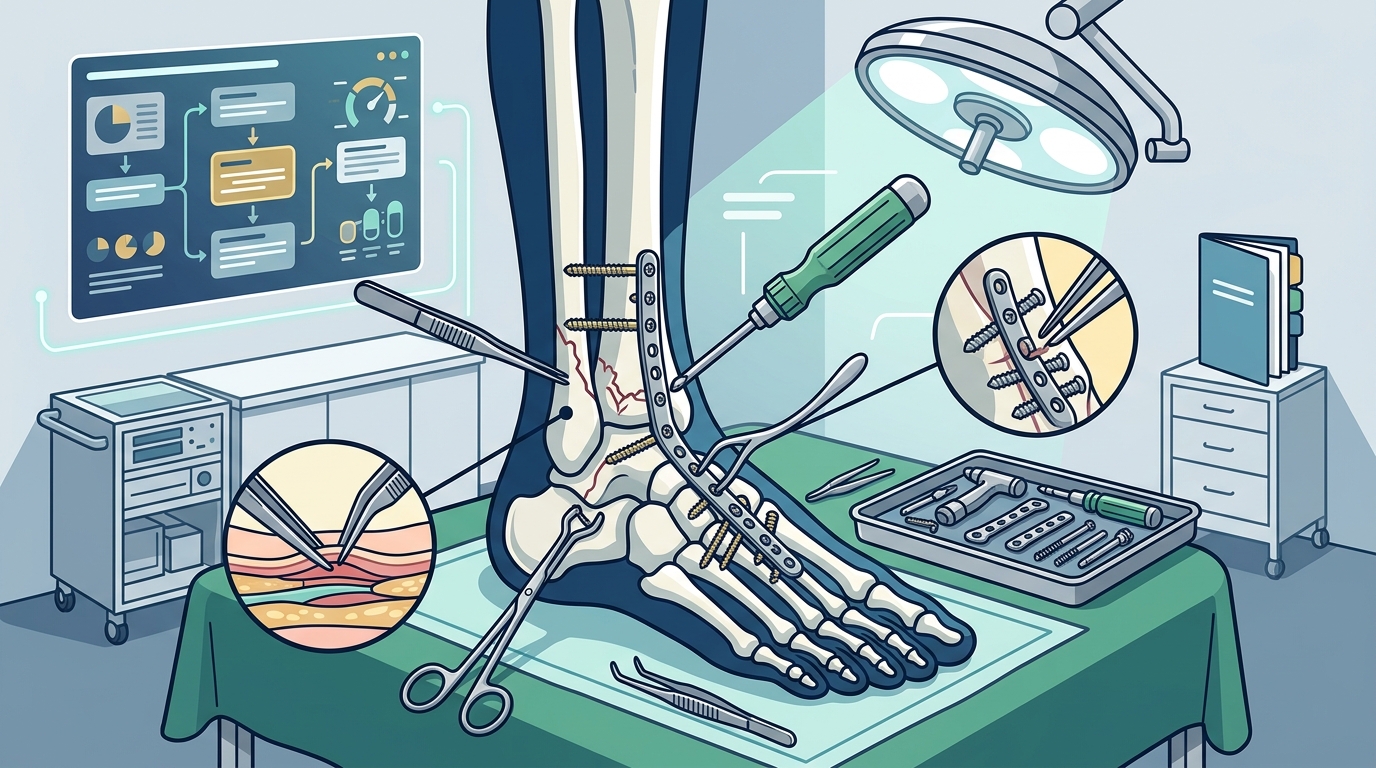
Minimizing surgical complications in complex ankle fractures requires precise anatomical reduction, stable internal fixation, and meticulous soft tissue management. At Leroy Butler, DO PLLC, our fellowship-trained approach prioritizes joint congruity and biological preservation to protect long-term mobility. These evidence-based strategies reduce the risk of post-traumatic arthritis and hardware failure.
Anatomical Precision and Joint Congruity
Complex ankle fractures often involve multiple columns of the tibia and fibula. The primary goal of surgical repair is to restore the talocrural joint to its original anatomical position. Even a small displacement of the tibial plafond can significantly increase contact pressure within the joint. This mechanical mismatch is a leading cause of early post-traumatic arthritis. For additional details, review the Accessibility Statement Leroy Butler.
Surgeons use intraoperative fluoroscopy to verify that the articular surface is perfectly flat. In cases where the fracture pattern is highly comminuted, the surgeon must ensure that the medial malleolus and the posterior tibial rim are anatomically reduced. This precision is critical because the ankle joint relies on tight ligamentous constraints rather than bony interlock for stability. For additional details, review the .
At Leroy Butler, DO PLLC, we emphasize that a millimeter of residual step-off can alter the biomechanics of the entire lower limb. By focusing on absolute congruity, we aim to preserve the cartilage surface and delay the onset of degenerative changes. This level of detail is essential for patients who wish to return to high-impact activities.
Soft Tissue Management and Timing
The soft tissue envelope around the ankle is often severely compromised in high-energy trauma. Swelling, blistering, and skin necrosis are common complications if surgery is performed too early. The concept of staged fixation is a cornerstone of modern orthopedic care for these injuries.
External fixation is frequently used as a temporary measure to stabilize the bone while the soft tissues heal. This allows the surgeon to wait for the "wrinkle sign," which indicates that the swelling has subsided enough to safely perform definitive internal fixation. Rushing this process can lead to wound dehiscence and deep infection.
Proper timing is a specific technique that minimizes morbidity. By respecting the biological limits of the skin, we reduce the need for complex flap coverage. This approach is standard in our practice in Dallas and Frisco, where we tailor the surgical timeline to the individual patient's soft tissue condition.
Implant Selection and Biomechanical Stability
Choosing the correct hardware is as important as the reduction itself. Complex fractures require implants that can withstand significant physiological loads. The use of locking plates has revolutionized the treatment of osteoporotic bone and comminuted fractures. These plates provide angular stability that standard plates cannot offer.
Biomechanical studies show that the placement of the plate relative to the fracture line affects stress distribution. A plate placed too close to the skin can cause irritation, while one placed too deep may not provide adequate fixation. The surgeon must balance these factors to ensure the implant remains stable without causing soft tissue complications.
In our clinic, we select implants based on the specific fracture pattern and bone quality. For example, a fibular fracture with a short distal segment may require a specific plate design to avoid the distal tip of the implant. This careful selection process is a key technique in minimizing hardware-related complications.
Perioperative Care and Infection Prevention
Infection remains one of the most devastating complications of ankle surgery. The perioperative period is critical for preventing this outcome. Standard protocols include the administration of prophylactic antibiotics within one hour before the incision. This timing ensures that therapeutic levels of the drug are present in the tissue at the time of surgery.
Meticulous surgical technique is also vital. This includes minimizing the time the wound is open and using atraumatic handling of the soft tissues. Postoperatively, patients are monitored closely for signs of infection, such as increased redness, warmth, or drainage. Early detection allows for prompt treatment, which can save the limb.
At Leroy Butler, DO PLLC, we follow strict aseptic protocols to mitigate these risks. We also educate patients on wound care and the importance of keeping the surgical site clean and dry. This collaborative approach between the surgical team and the patient is essential for a successful recovery.
Structured Rehabilitation and Early Mobilization
Rehabilitation is an integral part of the surgical plan. Prolonged immobilization can lead to joint stiffness and muscle atrophy. However, moving the ankle too early can compromise the healing fracture. A structured rehabilitation protocol balances these competing needs.
Early protected weight-bearing is often initiated once the fracture has achieved sufficient stability. This allows the patient to maintain muscle strength and joint range of motion. Physical therapists work closely with the surgeon to design a program that is safe and effective. The goal is to restore normal gait mechanics as quickly as possible.
Our team in Frisco and Dallas provides comprehensive rehabilitation guidance to ensure that patients progress at the right pace. This structured approach helps to minimize long-term functional deficits and improves overall outcomes.
Key Takeaways
- Anatomical reduction of the talocrural joint is the single most important factor in preventing post-traumatic arthritis.
- Staged fixation with external fixation allows the soft tissues to heal before definitive internal surgery.
- Locking plates provide superior stability for comminuted fractures and osteoporotic bone.
- Proper timing of antibiotic administration is critical for preventing surgical site infections.
- Structured rehabilitation protocols help restore function while protecting the healing fracture.
- Close monitoring of the soft tissue envelope is essential to avoid wound complications.
Frequently Asked Questions
What is the most common complication after complex ankle fracture surgery?
Post-traumatic arthritis is the most common long-term complication. It occurs when the articular surface is not perfectly restored, leading to abnormal joint mechanics and cartilage wear.
How long does it take to recover from complex ankle fracture repair?
Recovery typically takes six to twelve months. Patients can usually begin protected weight-bearing within six to eight weeks, but full return to high-impact activities may take a year or more.
Is external fixation painful?
External fixation involves pins that are placed through the skin into the bone. While the pins can be uncomfortable, the frame itself is not painful. Most patients find it manageable with proper care.
Can I drive after ankle surgery?
Driving is generally not allowed until you have full control of the pedal and are off pain medication. This usually occurs several weeks after surgery, depending on the severity of the fracture.
What role does bone quality play in surgical planning?
Bone quality significantly influences implant selection. Patients with osteoporosis may require locking plates or additional bone grafting to ensure stable fixation.
Conclusion
Minimizing complications in complex ankle fracture repair requires a multifaceted approach that combines surgical precision with biological respect. By focusing on anatomical reduction, soft tissue management, and structured rehabilitation, we can optimize outcomes for our patients. At Leroy Butler, DO PLLC, we are committed to providing the highest standard of care in Dallas and Frisco. If you are dealing with a complex ankle injury, to discuss your treatment options.