
Modern ACL reconstruction focuses on preserving native knee anatomy and accelerating functional recovery. At Leroy Butler, DO PLLC, we utilize advanced surgical techniques that prioritize long-term joint stability. These methods reduce the risk of graft failure and allow patients to return to high-demand activities with greater confidence and lower complication rates.
Evolution of Graft Selection and Harvesting
Anatomical vs. All-Inside Surgical Techniques
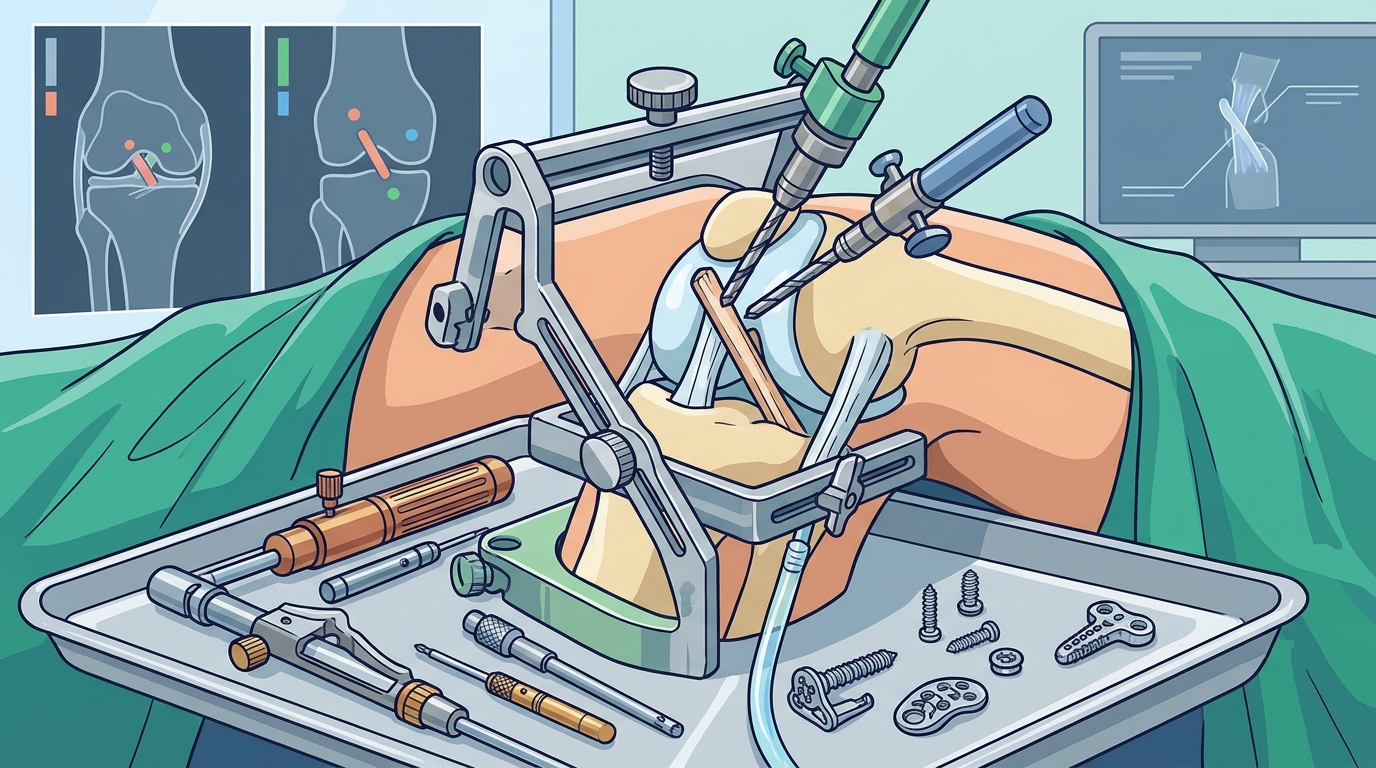
Surgical approach has evolved significantly to minimize trauma to the knee joint. Traditional open techniques involved large incisions to secure the graft. Modern all-inside fixation is a method where the graft is secured entirely within the bone tunnels using specialized screws or buttons, eliminating the need for external hardware. This technique reduces the risk of nerve injury and allows for faster early range of motion. Another advancement is the use of anatomical tunnel placement. Surgeons now use patient-specific 3D imaging to place tunnels exactly where the native ACL attached. This precision restores the knee's natural kinematics, preventing abnormal pivot shift and reducing the risk of secondary meniscal tears. At our Dallas and Frisco locations, we utilize these precise mapping tools to ensure optimal graft tension.
Biologic Augmentation and Accelerated Healing
Advanced Rehabilitation Protocols and Technology
Surgery is only half the equation; rehabilitation determines the final outcome. Modern protocols have moved away from strict immobilization toward early, controlled motion. Functional bracing is a device that limits knee hyperextension during the early healing phase, protecting the graft while allowing safe movement. Additionally, wearable technology and motion capture systems are now used to monitor gait mechanics in real-time. These tools provide objective data on limb symmetry and loading patterns, allowing physical therapists to adjust exercises with precision. The goal is to restore neuromuscular control, not just strength. Patients who engage in high-quality, data-driven rehabilitation are significantly less likely to re-injure the knee. Our team coordinates closely with physical therapists to ensure the surgical plan and rehab plan are aligned from day one.
Long-Term Outcomes and Return to Sport
The ultimate measure of success is the ability to return to pre-injury activity levels. Studies indicate that with modern techniques, over 80% of athletes return to competitive sports within 9 to 12 months. However, the quality of return is as important as the timing. Advanced reconstruction methods aim to restore the knee's protective reflexes, which are often lost after injury. This reduces the risk of secondary injuries to the meniscus and cartilage. Patients who undergo anatomical reconstruction with proper rehabilitation report higher satisfaction scores and lower rates of osteoarthritis compared to older techniques. The focus has shifted from simply stabilizing the knee to restoring its full functional capacity. This holistic approach ensures that the knee can handle the demands of daily life and athletic performance for years to come.
Key Takeaways
- Graft selection is now personalized based on age, activity level, and injury complexity. according to Selection of Interferential
- All-inside fixation techniques reduce surgical trauma and accelerate early recovery.
- Anatomical tunnel placement using 3D imaging restores natural knee mechanics.
- Biologic adjuncts like PRP may enhance graft healing and reduce early pain.
- Data-driven rehabilitation protocols improve neuromuscular control and prevent re-injury.
- Long-term success depends on restoring protective reflexes, not just structural stability.
Frequently Asked Questions
What is the best graft for ACL reconstruction?
There is no single best graft for everyone. Autografts are generally preferred for young, active patients due to better long-term durability, while allografts may be better for older patients or those with multiple ligament injuries to avoid harvesting pain.
How long does ACL reconstruction surgery take?
The surgery itself typically takes 60 to 90 minutes. The total time in the operating room, including anesthesia and setup, is usually around 2 to 3 hours. Recovery time varies, but most patients are home the same day or the next morning.
Can I return to sports after ACL reconstruction?
Yes, most patients can return to sports. However, this requires a structured rehabilitation program and clearance from your surgeon. The timeline is typically 9 to 12 months, depending on the sport and individual healing progress.
What is the difference between anatomical and non-anatomical reconstruction?
Anatomical reconstruction places the graft in the exact location of the native ACL, restoring natural knee movement. Non-anatomical techniques place the graft in a different position, which can alter knee mechanics and increase the risk of secondary injuries.
Is PRP effective for ACL healing?
How do I know if I need ACL reconstruction?
Need for surgery is determined by symptoms like instability, giving way, and activity level. If you cannot perform your desired activities due to knee instability, reconstruction may be recommended. A physical exam and MRI are essential for diagnosis.
Next Steps for Your Knee Care
If you are experiencing knee instability or have been diagnosed with an ACL tear, a consultation is the first step toward recovery. At Leroy Butler, DO PLLC, we provide personalized surgical planning and comprehensive post-operative care in Dallas and Frisco. To schedule an appointment or learn more about our knee sports medicine services, please today.