
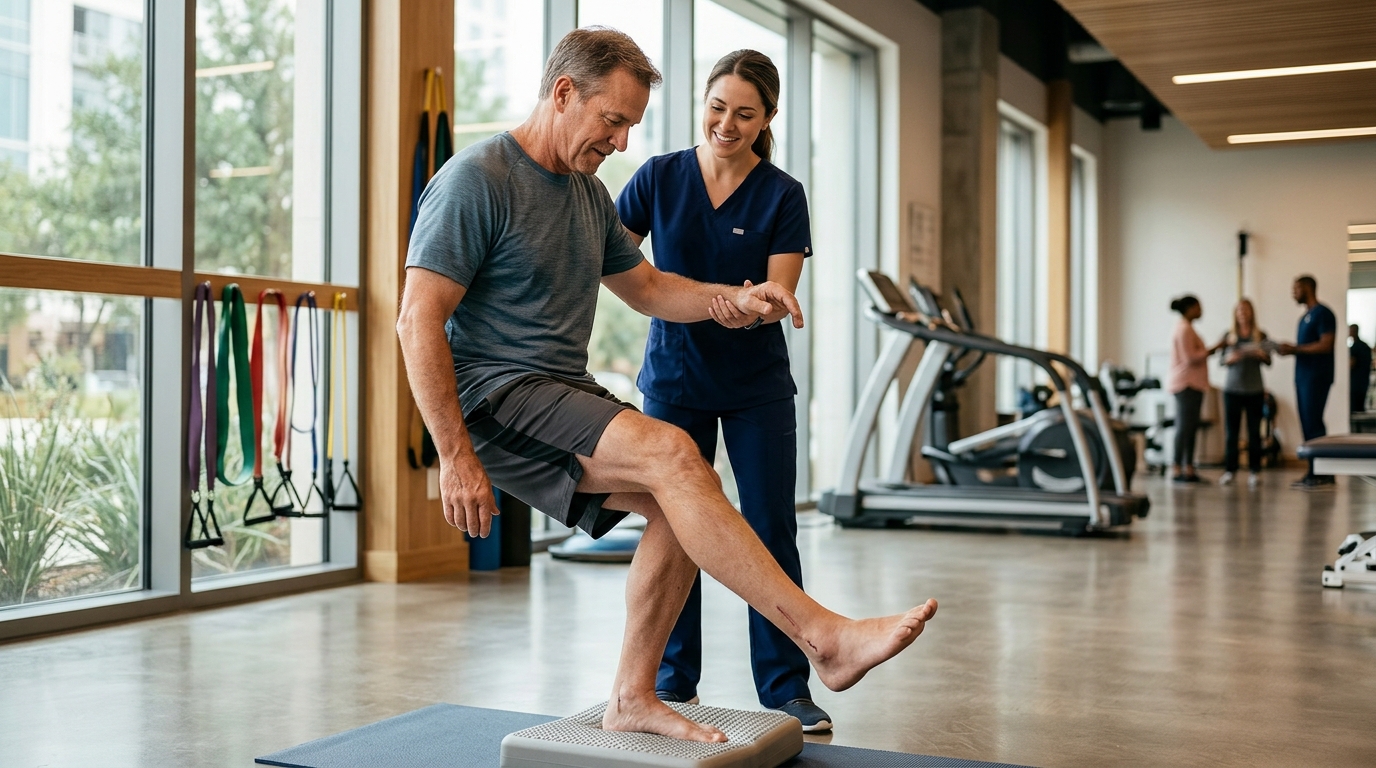
6 Key Stages of Physical Therapy After Ankle Replacement Surgery
Recovering from total ankle replacement requires a structured, phased approach to physical therapy. Each stage builds on the previous one, moving from protecting the surgical site to restoring full, pain-free mobility. At Leroy Butler, DO PLLC, we guide patients through these critical milestones to ensure safe and effective healing in our Dallas and Frisco clinics.
1. Immediate Post-Operative Protection (Weeks 0-2)
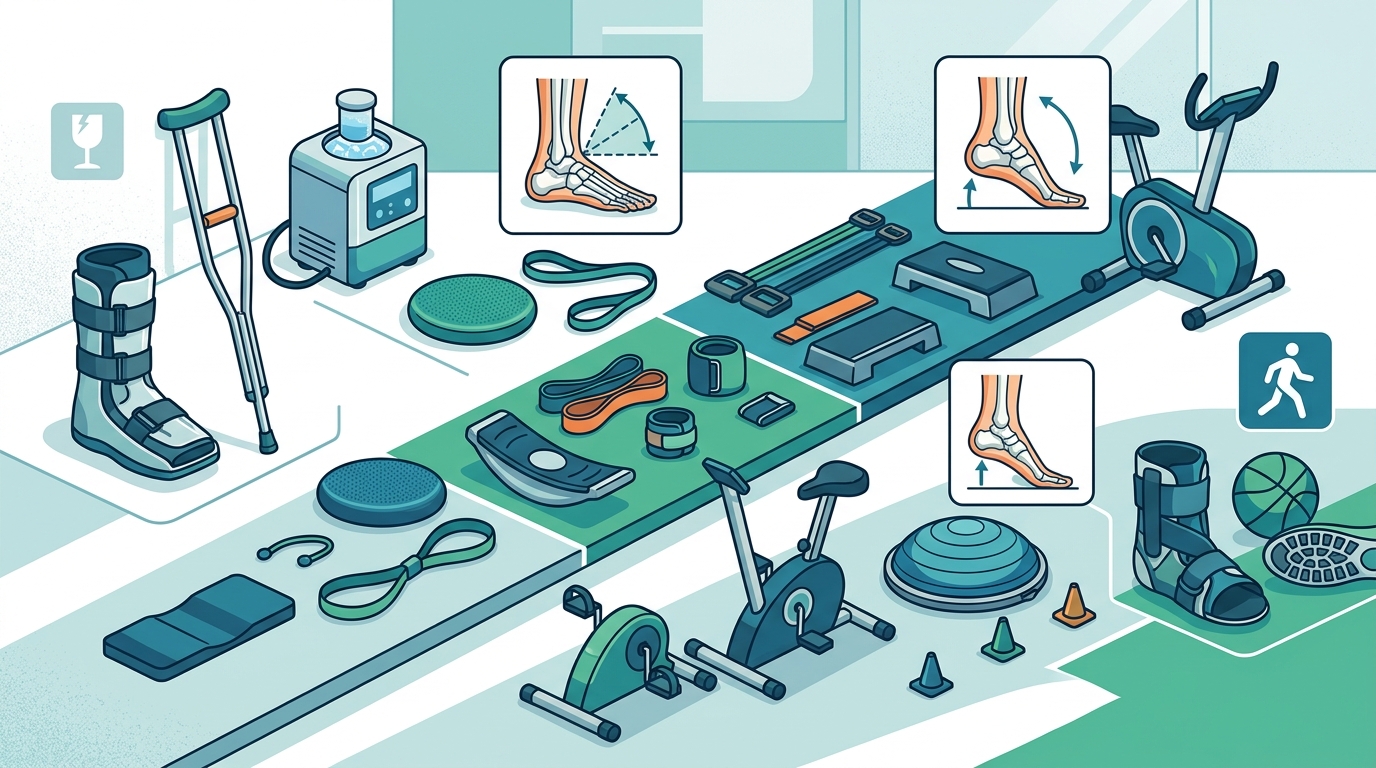
Protect the incision and manage swelling. The primary goal during the first two weeks is to keep the surgical site clean and dry while controlling edema. Patients typically wear a protective boot and use crutches to keep weight off the operated leg. This phase prevents strain on the new implant and allows the soft tissues to begin initial healing.
2. Early Range of Motion (Weeks 2-6)
Begin gentle movement to prevent stiffness. Once the incision has healed sufficiently, physical therapy focuses on passive and active-assisted range of motion exercises. Therapists help move the ankle through its natural arc to prevent joint capsule tightening. This stage is crucial for maintaining the flexibility of the surrounding ligaments and tendons.
3. Progressive Weight Bearing (Weeks 6-12)
Transition from crutches to full weight bearing. As bone and soft tissue strength improves, patients gradually increase the amount of weight placed on the new ankle. This phase involves weaning off assistive devices and practicing proper gait mechanics. Correcting walking patterns early prevents compensatory issues in the knee, hip, and back.
4. Strength and Stability Training (Months 3-6)
Rebuild muscle power around the joint. With full weight bearing established, therapy shifts to strengthening the calf, shin, and foot muscles. Resistance exercises and balance training help stabilize the ankle joint. This stability is essential for preventing future sprains and ensuring the implant functions correctly under load.
5. Advanced Functional Training (Months 6-9)
Prepare for daily activities and low-impact exercise. Patients work on more complex movements such as stair climbing, uneven terrain walking, and basic sports drills. The focus is on dynamic stability and proprioception, which is the body's ability to sense joint position. This stage bridges the gap between clinical recovery and real-world activity.
6. Return to Activity and Maintenance (Month 9+)
Resume normal life with long-term joint health habits. The final stage involves a gradual return to preferred recreational activities and work duties. Patients learn self-management strategies to maintain ankle health for the long term. Regular check-ins with the surgical team ensure the implant remains healthy and functional over time.
Choosing the Right Phase for Your Recovery
Progression through these stages is not strictly time-based but symptom-based. Patients should advance only when they meet specific clinical benchmarks, such as reduced swelling and adequate strength. Working with a fellowship-trained orthopedic surgeon ensures that each phase is tailored to your individual healing rate and goals.
Frequently Asked Questions
How long does physical therapy last after ankle replacement?
Most patients complete formal physical therapy within six to nine months, though maintenance exercises continue indefinitely. The timeline varies based on individual healing speed and pre-surgical health.
Can I drive after ankle replacement surgery?
Driving is typically allowed once you can operate the pedals safely and without pain, usually after the first few weeks. Your surgeon will provide specific clearance based on your progress.
What exercises are forbidden during early recovery?
High-impact activities and aggressive stretching are avoided in the first few weeks. These actions can stress the healing tissues and compromise the implant's stability.
Will I need a brace after surgery?
Many patients use a walking boot for the first several weeks to protect the joint. The duration of brace use depends on your specific surgical technique and healing progress.
How do I know if I am ready for the next phase?
Your physical therapist will assess your range of motion, strength, and pain levels to determine readiness. Advancing too quickly can lead to setbacks, so patience is key.