

7 Ways Surgeons Prevent Complications in Complex Ankle Fracture Repairs
Complex ankle fractures carry a higher risk of surgical site infections, stiffness, and delayed healing compared to simple breaks. Surgeons mitigate these risks through precise surgical approaches, careful patient selection, and rigorous post-operative protocols. At Leroy Butler, DO PLLC, our fellowship-trained orthopedic surgeons in Dallas and Frisco prioritize these evidence-based strategies to optimize long-term joint function.
1. Precise Surgical Approach Selection
The surgical approach is one of the most important intervention factors for complex ankle fractures. Choosing the correct incision and exposure technique minimizes unnecessary trauma to surrounding tissues. Surgeons tailor the approach to the specific fracture pattern, such as using a fibular notch approach for distal tibial plafond injuries. This precision reduces the likelihood of iatrogenic damage to nerves and blood vessels. For additional details, review the Notice of Privacy Practices.
2. Rigorous Patient Selection
Properly selected cases yield low complication rates for both operative and nonoperative treatments. Surgeons carefully evaluate patient health, bone quality, and lifestyle factors before recommending surgery. In elderly patients, high complication rates are often linked to poor baseline health rather than the surgery itself. Identifying these risk factors early allows for customized treatment plans that avoid unnecessary surgical risks. For additional details, review the Accessibility Statement Leroy Butler.
3. Infection Prevention Protocols
Surgical site infection is the most common early complication of operative treatment. Incidence rates for these infections vary widely, ranging from 1.5% to 16% in different studies. Strict adherence to sterile technique, appropriate antibiotic prophylaxis, and meticulous wound care are critical. Surgeons monitor these wounds closely in the immediate post-operative period to catch early signs of infection. For additional details, review the .
4. Soft Tissue Management
Protecting the skin and soft tissue envelope is essential for successful healing. Prolonged cast pressure or aggressive surgical dissection can cause skin problems and wound breakdown. Surgeons often wait for soft tissue swelling to subside before operating on severe injuries. This patience prevents skin necrosis and reduces the need for complex wound repairs.
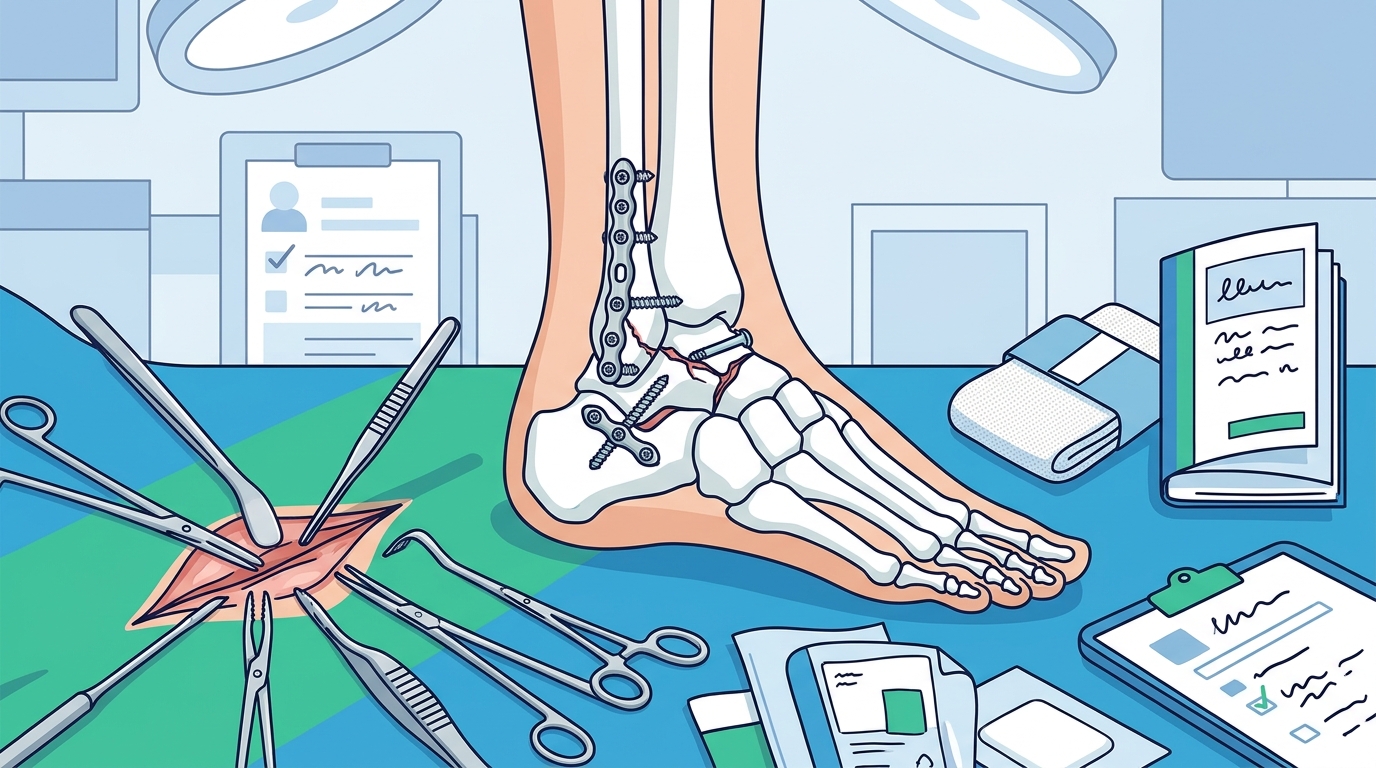
5. Anatomic Reduction and Stability
Restoring the joint to its exact original position prevents joint redislocation. A stable, anatomically correct reduction ensures the ankle can bear weight safely during recovery. Surgeons use advanced imaging and intraoperative checks to verify alignment. This step is crucial for preventing long-term arthritis and restricted range of motion.
6. Controlled Early Mobilization
Structured movement protocols prevent ankle stiffness and blood clots. Prolonged immobilization can lead to restricted range of motion and deep vein thrombosis. Surgeons design specific physical therapy regimens that balance protection with necessary movement. This approach helps maintain muscle strength and joint flexibility without compromising the repair.
7. Structured Follow-Up and Monitoring
Regular monitoring allows for early detection of healing problems. Surgeons schedule frequent check-ins to assess bone union and soft tissue health. This proactive management catches issues like delayed healing before they become severe. Patients in North Texas benefit from the close coordination of care available at our two locations.
Choosing the Right Approach
The best strategy depends on the specific fracture pattern and the patient's overall health. A fellowship-trained surgeon can evaluate your unique anatomy and medical history to determine the safest path to recovery. At Leroy Butler, DO PLLC, we combine subspecialty expertise with a patient-centered philosophy to minimize risks and maximize outcomes.
Frequently Asked Questions
What is the most common complication after ankle fracture surgery?
Surgical site infection is the most common early complication, with incidence rates varying between 1.5 and 16 percent depending on the study and patient population.
How do surgeons prevent stiffness after ankle surgery?
Surgeons use controlled early mobilization protocols that balance joint protection with necessary movement to maintain range of motion and prevent blood clots.
Is surgery always the best option for complex ankle fractures?
No, proper patient selection is critical. In properly selected cases, both operative and nonoperative treatments can yield low complication rates, depending on the fracture type and patient health.
Why is the surgical approach so important?
The surgical approach is a key intervention factor because it directly impacts the amount of tissue trauma. A precise approach minimizes damage to nerves, vessels, and skin, reducing the risk of wound complications.
How does age affect complication rates in ankle fractures?
Geriatric patients face higher complication rates in literature, often due to underlying health conditions. However, in properly selected elderly patients, complication rates for both treatment types remain low.