

Total ankle replacement is a surgical procedure that replaces a damaged ankle joint with an artificial implant to relieve pain and restore motion. At Leroy Butler, DO PLLC, this advanced procedure serves as a critical option for patients in Dallas and Frisco who have exhausted conservative treatments for end-stage arthritis. Unlike fusion, which locks the joint, replacement aims to preserve the natural bending and flexing of the foot.
Defining the Procedure and Its Purpose
Total ankle replacement is a surgical option for patients with arthritis of the ankle, also known as ankle arthroplasty. The primary goal is to relieve pain while maintaining the range of motion that is essential for daily activities. According to University of Washington Orthopedics, this surgery is specifically designed for those suffering from degenerative joint disease where the cartilage has worn away completely.
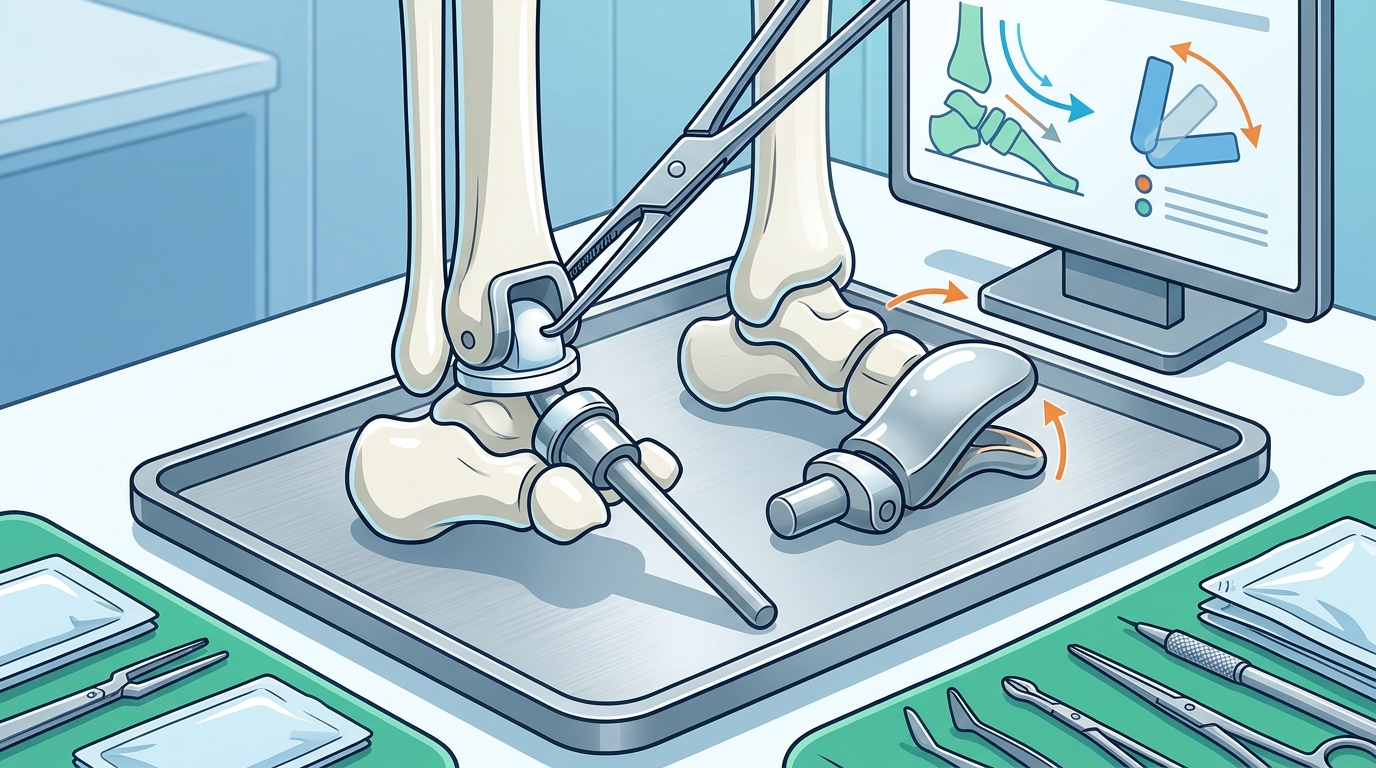
The procedure involves removing the damaged bone and cartilage from the tibia (shin bone) and the talus (ankle bone). Metal components are then attached to these bones, and a plastic spacer is placed between them to allow for smooth movement. This mechanical reconstruction mimics the natural joint, providing a functional alternative to more rigid surgical options.
How the Implant Works Mechanically
The mechanics of the implant rely on a modular design that distributes weight across the joint. The metal components are typically made from cobalt-chromium alloys, which are durable and resistant to wear. The spacer between the metal parts is usually made of high-density polyethylene, a material that reduces friction during movement.
By preserving motion, the implant allows the foot to adapt to uneven terrain, such as walking on grass or gravel. This is a significant advantage over ankle fusion, which eliminates motion entirely. HSS Health Library notes that ankle replacement serves as an alternative to fusion to relieve pain while preserving flexibility. This preservation of biomechanics is crucial for patients who wish to maintain an active lifestyle post-surgery.
Identifying the Right Candidate
Not every patient with ankle pain is a candidate for replacement. The ideal candidate is someone with severe arthritis who has failed non-surgical treatments like physical therapy, bracing, or injections. The decision is often made after a thorough evaluation of the joint's structural integrity and the patient's overall health.
At Leroy Butler, DO PLLC, the evaluation process is comprehensive. Dr. Butler, a fellowship-trained orthopedic surgeon, assesses the specific type of arthritis and the condition of the surrounding ligaments. For example, a patient with a history of a severe ankle fracture that led to post-traumatic arthritis may be a strong candidate. The surgeon must ensure that the bones are healthy enough to support the implant and that the patient has realistic expectations for recovery.
Recovery Timeline and Rehabilitation
Recovery from total ankle replacement is a gradual process that requires patience and consistent effort. Most patients spend a few days in the hospital after the surgery. Upon discharge, the foot is typically immobilized in a cast or a removable boot to protect the healing bones.
The rehabilitation phase is critical for long-term success. Patients usually begin physical therapy a few weeks after surgery to regain strength and mobility. The goal is to gradually increase weight-bearing activities. While pain relief is often noticeable within the first few months, full recovery can take up to a year. Consistency in therapy exercises is the single most important factor in achieving a good outcome.
Replacement vs. Fusion: Making the Choice
When deciding between replacement and fusion, patients must weigh the benefits of motion against the durability of the implant. Ankle fusion is a more permanent solution that eliminates pain by locking the joint in place. However, it can place extra stress on the midfoot and knee over time.
Replacement offers the benefit of motion but may require revision surgery in the future if the implant wears out. The choice depends on the patient's age, activity level, and the severity of the arthritis. A younger, more active patient might benefit more from the motion preservation of a replacement, while an older patient with lower activity demands might consider fusion. This decision is highly individual and requires a detailed discussion with an orthopedic specialist.
Key Takeaways
- Total ankle replacement is a surgical option for severe arthritis that aims to relieve pain while preserving motion.
- The procedure involves replacing damaged bone and cartilage with metal and plastic components.
- It is an alternative to ankle fusion, which locks the joint and eliminates movement.
- Candidates must have failed conservative treatments and have healthy bone structure.
- Recovery involves a period of immobilization followed by structured physical therapy.
- The choice between replacement and fusion depends on age, activity level, and arthritis severity.
Frequently Asked Questions
How long does a total ankle replacement last?
Modern implants are designed to last for many years, often 10 to 15 years or more. However, the lifespan can vary based on the patient's weight, activity level, and adherence to post-operative care instructions.
Is total ankle replacement painful?
The surgery itself is performed under anesthesia, so you will not feel pain during the procedure. Post-operative pain is managed with medication and typically decreases significantly as healing progresses.
Can I walk immediately after the surgery?
No, you will not walk immediately. You will be immobilized in a cast or boot for several weeks to allow the bones to heal securely to the implant.
What are the risks of total ankle replacement?
Who performs total ankle replacement in Dallas?
In Dallas and Frisco, Leroy Butler, DO PLLC provides advanced ankle care, including total ankle replacement for patients with severe arthritis.