

Do Corticosteroid Injections Really Work for Stubborn Plantar Fasciitis Pain?
Yes, corticosteroid injections can provide significant short-term pain relief for stubborn plantar fasciitis, but they are not a permanent cure. At Leroy Butler, DO PLLC, we view these injections as a strategic tool to break the pain cycle, allowing you to engage in physical therapy and load management. The goal is to reduce inflammation enough to restore function, not to rely on repeated chemical suppression of a structural issue.
The Mechanism of Action: Why Steroids Help
Corticosteroid injection is a procedure where a potent anti-inflammatory medication is delivered directly to the site of pain, typically the medial calcaneal tubercle where the plantar fascia attaches to the heel bone. This targeted approach bypasses the systemic effects of oral anti-inflammatories, delivering a high concentration of medication exactly where the tissue is inflamed. The primary benefit is the rapid reduction of local inflammation and pain signaling.
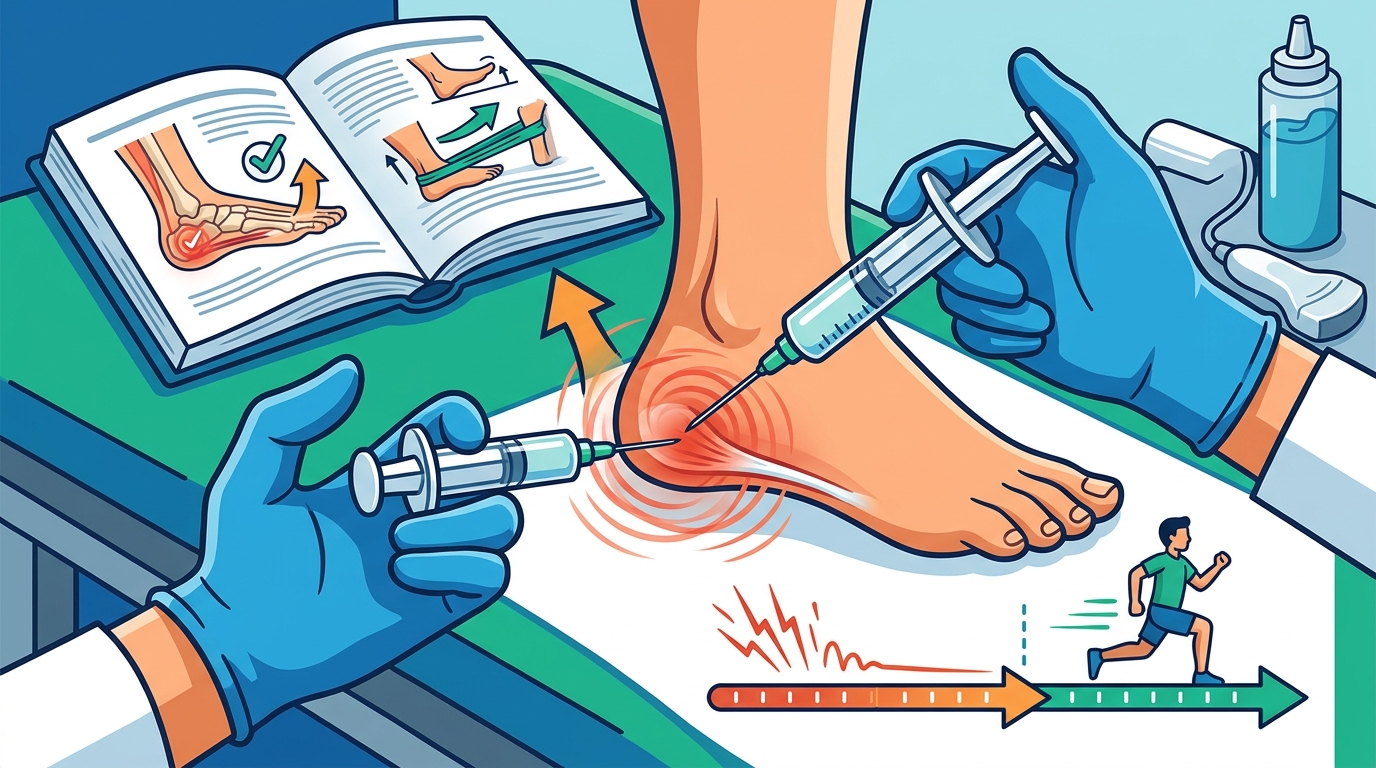
For patients who have failed conservative measures like rest and stretching, this direct intervention can be a turning point. By lowering the inflammatory load, the injection creates a window of opportunity. During this window, the patient can participate in rehabilitation exercises that might have been too painful to perform previously. This synergy between chemical relief and physical therapy is often what leads to long-term success.
Short-Term Relief vs. Long-Term Outcomes
It is crucial to understand that the relief from a corticosteroid injection is typically temporary. Most patients experience significant pain reduction within 24 to 72 hours, but this effect often diminishes over several weeks to months. The injection treats the symptom (pain and inflammation) rather than the underlying cause (often biomechanical overload or tissue degeneration). Therefore, it should be viewed as a bridge to recovery, not the destination.
Studies suggest that while immediate relief is common, long-term outcomes depend heavily on the patient's adherence to a comprehensive treatment plan. If the injection is used in isolation without addressing gait mechanics or tissue loading, the pain often returns once the medication wears off. At Leroy Butler, DO PLLC, we emphasize that the injection is one component of a multi-modal strategy, not a standalone solution.
Risks and Limitations of Repeated Injections
While effective, corticosteroid injections carry specific risks that must be weighed against the benefits. One of the most significant concerns is the potential for plantar fascia rupture, a rare but serious complication where the tendon tears due to weakened tissue. Additionally, repeated injections can lead to fat pad atrophy, thinning of the skin, and potential damage to surrounding soft tissues. For this reason, most orthopedic surgeons limit the number of injections to one or two per year.
Patients with diabetes or those on blood thinners require special consideration, as steroids can temporarily elevate blood sugar levels and increase bleeding risk. It is essential to discuss your full medical history with your provider before proceeding. Understanding these limitations helps set realistic expectations and ensures that the decision to inject is made with full informed consent.
Integrating Injections with Conservative Care
At Leroy Butler, DO PLLC, we often use image-guided techniques to ensure precise placement of the medication. This accuracy maximizes the therapeutic effect while minimizing the risk of tissue damage. The combination of precise injection, targeted therapy, and patient education creates a comprehensive approach that addresses both the immediate pain and the underlying causes of the condition.
Key Takeaways
- Corticosteroid injections provide effective short-term pain relief for stubborn plantar fasciitis.
- The relief is temporary and serves as a window for engaging in physical therapy.
- Repeated injections carry risks, including plantar fascia rupture and fat pad atrophy.
- Long-term success depends on addressing biomechanical causes, not just pain.
- Image-guided techniques can improve accuracy and safety of the procedure.
- Patients with diabetes or on blood thinners require special medical consideration.
- Conservative care, including orthotics and strengthening, is essential for lasting results.
Frequently Asked Questions
How long does the pain relief from a corticosteroid injection last?
Relief typically begins within 24 to 72 hours and can last from several weeks to a few months. The duration varies based on individual biology and adherence to rehabilitation protocols.
Can I walk immediately after the injection?
Yes, you can usually walk immediately, but you may experience increased pain for 24 to 48 hours as the medication takes effect. It is recommended to rest the foot and apply ice as directed.
How many injections can I have in a year?
Most providers limit corticosteroid injections to one or two per year to minimize the risk of tissue damage and other complications.
Is the injection painful?
The procedure involves a needle insertion, which can cause brief discomfort. The injection itself may cause a temporary burning sensation, but this usually subsides quickly.
Will the injection cure my plantar fasciitis?
No, the injection reduces inflammation and pain but does not cure the underlying condition. Long-term resolution requires addressing biomechanical factors and tissue health through therapy and lifestyle changes.