
What to Expect During Achilles Tendon Repair Recovery
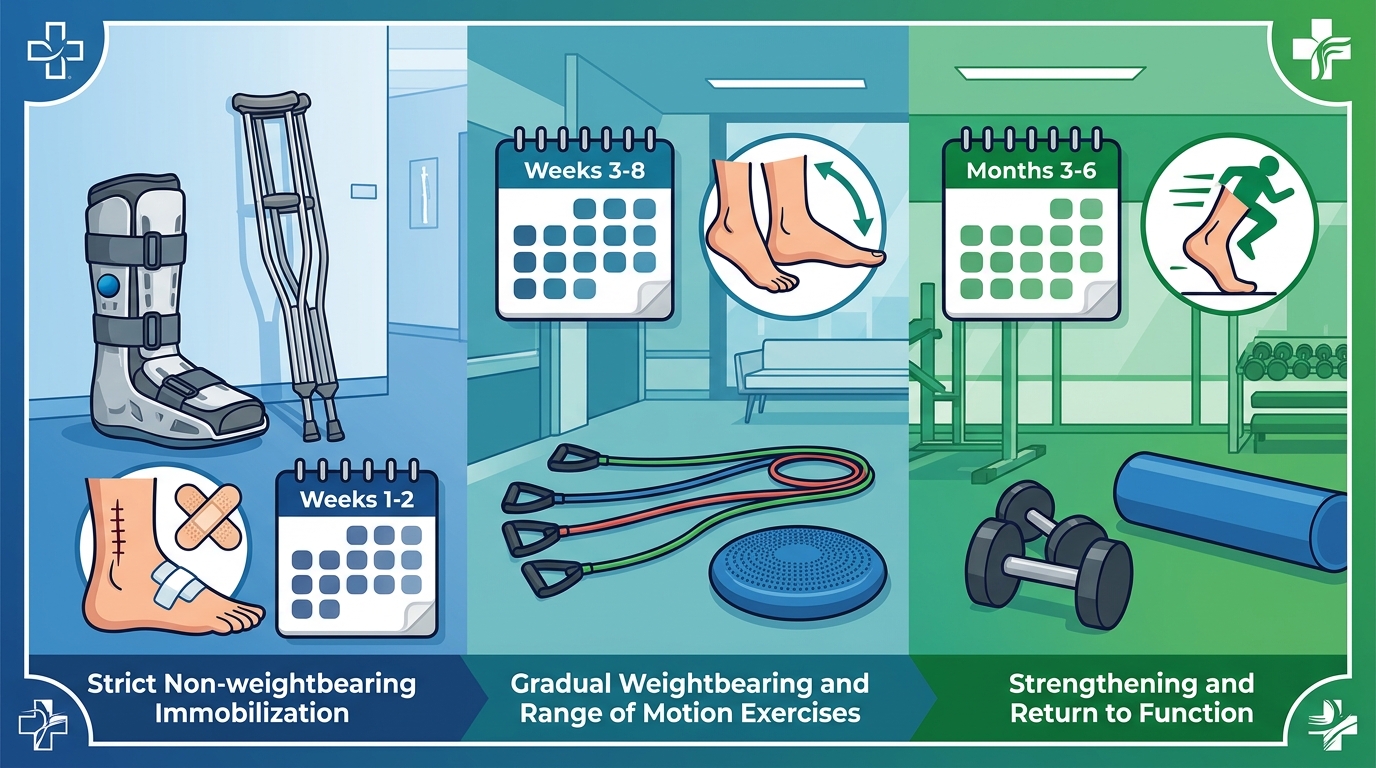
Recovery from Achilles tendon repair surgery typically spans three to six months, progressing from strict non-weightbearing immobilization to gradual strengthening and functional return. At Leroy Butler, DO PLLC, we guide patients through this structured timeline in our Dallas and Frisco clinics, ensuring each phase aligns with your specific surgical repair and healing response.
The Initial Immobilization Phase
The first phase of recovery focuses on protecting the surgical repair while the tendon begins to heal. HSS Health notes that patients typically experience three to four weeks of immobilization and non-weightbearing status using crutches. During this period, the foot is usually kept in a cast or removable boot with the ankle in a plantarflexed position to reduce tension on the healing tissue. This strict limitation is critical because premature weight-bearing can compromise the integrity of the repair. For additional details, review the Notice of Privacy Practices.
Progressive Weight-Bearing and Mobility
As the tendon gains initial strength, the focus shifts to restoring range of motion and gradually introducing weight. MedlinePlus explains that the Achilles tendon connects calf muscles to the heel bone, and these structures are essential for walking and pushing off. Patients typically transition from non-weightbearing to partial weight-bearing in a walking boot over the next several weeks. This phase requires careful monitoring to ensure the tendon tolerates the increased load without swelling or pain. For additional details, review the Accessibility Statement Leroy Butler.
Physical Therapy and Strengthening
Structured physical therapy is the cornerstone of the mid-to-late recovery stages. HSS Health emphasizes that recovery time varies, but consistent therapy is key to regaining strength. Exercises progress from gentle range-of-motion movements to resistance training and balance drills. The goal is to restore the calf muscles' ability to generate force, which is necessary for activities like climbing stairs or running. Patients often report that this phase is the most challenging due to the need for consistent daily effort.
Return to Activity and Long-Term Outlook
Returning to full activity, including sports, usually occurs between four and six months post-surgery. McLeod Health highlights that surgical repair can significantly reduce the risk of re-rupture compared to non-operative treatment. However, the timeline is individualized based on healing progress and functional goals. At Leroy Butler, DO PLLC, we tailor the return-to-play criteria to ensure the tendon is fully conditioned before high-impact activities resume. according to Returning to Sports
Key Takeaways
- Initial recovery involves 3-4 weeks of non-weightbearing immobilization.
- Progressive weight-bearing in a boot typically begins after the initial healing phase.
- Physical therapy is essential for restoring strength and range of motion.
- Full return to sports usually takes 4-6 months.
- Surgical repair offers a lower re-rupture rate than conservative treatment.
- Individual healing rates vary, requiring personalized medical guidance.
Frequently Asked Questions
How long do I need to use crutches after Achilles repair?
Most patients use crutches for the first three to four weeks while in a non-weightbearing status. This duration allows the tendon to heal sufficiently before bearing any weight.
When can I start walking without a boot?
Transitioning out of the boot usually occurs around 6 to 8 weeks, depending on your progress in physical therapy and your surgeon's assessment of tendon strength.
Is physical therapy mandatory after surgery?
Yes, structured physical therapy is critical for regaining strength, flexibility, and balance. Skipping therapy can lead to long-term stiffness and weakness.
How long until I can run again?
Running is typically introduced around 4 to 6 months post-surgery, only after you have demonstrated adequate strength and endurance in lower-impact activities.
What is the risk of the tendon tearing again?
Surgical repair significantly reduces the re-rupture risk, with studies showing rates as low as 1% compared to higher rates in non-operative cases.