

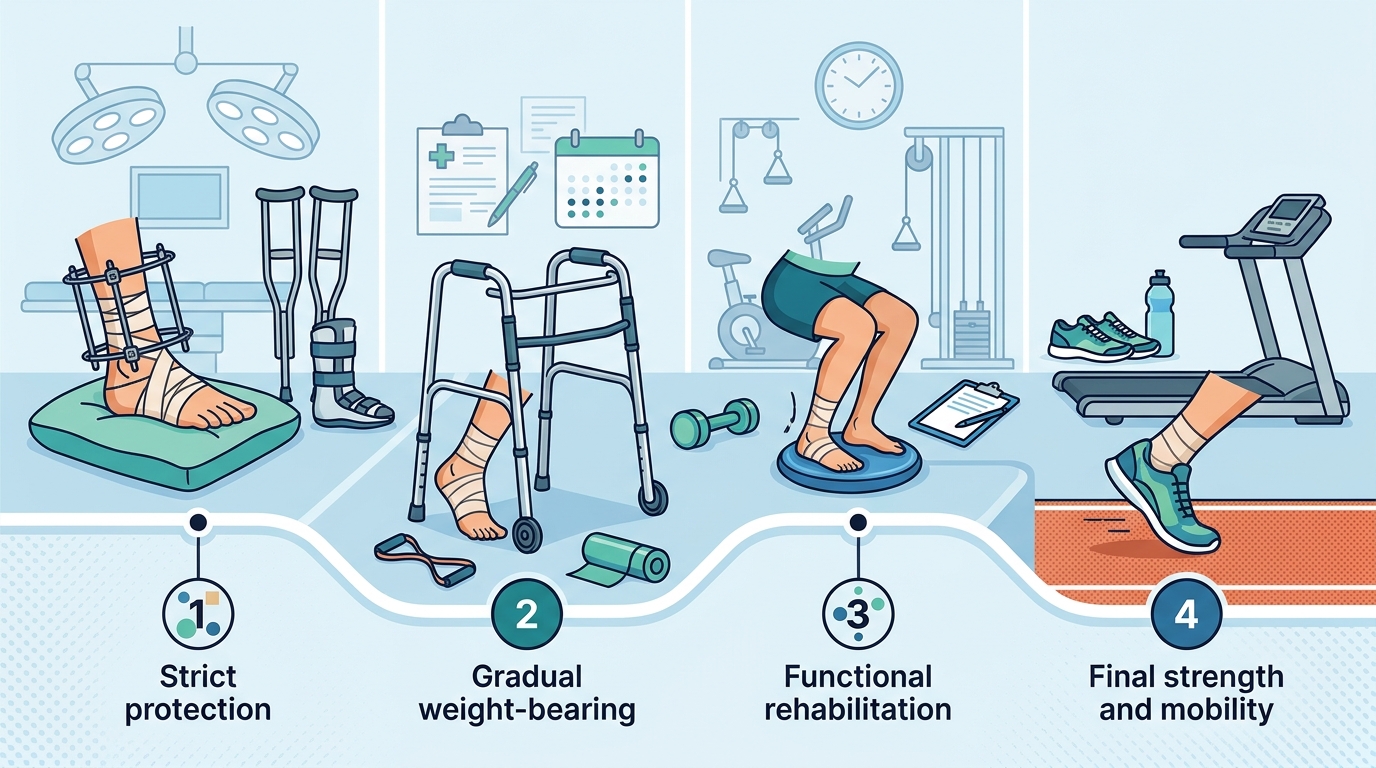
Recovery from complex ankle fracture surgery is a structured, multi-phase process that typically spans three to six months. Patients progress from strict non-weight-bearing protection to gradual weight-bearing and finally to functional rehabilitation. At Leroy Butler, DO PLLC, we guide patients through this journey with a focus on protecting the surgical repair while restoring mobility and strength.
Phase One: Immediate Post-Operative Protection
The first two to six weeks are critical for bone healing and soft tissue stabilization. Non-weight-bearing status is the primary directive during this phase. Patients must use crutches, a knee scooter, or a wheelchair to avoid placing any load on the operated ankle. The surgical site is typically covered with a sterile dressing, and the limb is elevated above heart level to minimize swelling. Swelling is a normal physiological response to trauma and surgery, but it can be managed with consistent elevation and ice application. The goal is to allow the fracture fragments to begin uniting without mechanical stress that could displace the hardware. For additional details, review the Journal Leroy Butler DO.
Phase Two: Gradual Weight-Bearing
Transitioning to weight-bearing is a gradual process, usually beginning around six to eight weeks post-surgery. This phase is often the most challenging for patients because it requires a shift in mindset from complete rest to active participation. Partial weight-bearing involves using a walking boot and crutches to limit the amount of force applied to the ankle. The surgeon will provide specific instructions on how much weight to bear, often starting at 20% to 50% of body weight. This progression is guided by radiographic evidence of bone healing. Patients may experience increased swelling and discomfort during this transition, which is expected as the joint begins to bear load again. Patience is essential, as rushing this phase can compromise the surgical outcome. For additional details, review the Notice of Privacy Practices.
Phase Three: Functional Rehabilitation
Once full weight-bearing is achieved, typically between three and four months, the focus shifts to restoring range of motion and strength. Physical therapy becomes the central component of recovery. Exercises target the ankle's dorsiflexion and plantarflexion, as well as the surrounding musculature in the calf and foot. Balance and proprioception training are also introduced to retrain the nervous system's ability to stabilize the joint. This phase may last several months, with patients gradually returning to daily activities, driving, and eventually sports. The timeline varies based on the severity of the initial fracture and the individual's healing rate. Consistency in therapy exercises is the strongest predictor of a successful return to function. For additional details, review the Accessibility Statement Leroy Butler.
Managing Complications and Pain
While most patients heal well, complications can arise and require prompt attention. Infection is a serious risk, indicated by increasing redness, warmth, or fever, and must be reported immediately. Numbness or tingling around the incision site is common due to nerve irritation during surgery but usually resolves over time. Persistent pain that does not improve with prescribed medication or rest should be discussed with the surgical team. Deep vein thrombosis (DVT) is a potential risk after lower extremity surgery, and patients are often prescribed blood thinners or advised to use compression stockings. Monitoring for signs of DVT, such as calf pain or swelling, is crucial during the non-weight-bearing phase.
Long-Term Outlook and Maintenance
Most patients achieve full functional recovery within six to twelve months, though some may experience residual stiffness or mild arthritis. Post-traumatic arthritis is a known long-term consequence of complex ankle fractures, even with successful surgical repair. Regular follow-up appointments allow the surgeon to monitor joint health and address any emerging issues. Maintaining a healthy weight and engaging in low-impact exercise, such as swimming or cycling, can help protect the ankle in the long term. At Leroy Butler, DO PLLC, we emphasize that recovery is a marathon, not a sprint, and that long-term joint health depends on consistent care and realistic expectations.
Key Takeaways
- Recovery typically takes three to six months, with full return to activity potentially taking up to a year.
- Strict non-weight-bearing is required for the first two to six weeks to protect the surgical repair.
- Gradual weight-bearing begins around six to eight weeks, guided by imaging and surgeon instructions.
- Physical therapy is essential for restoring strength, balance, and range of motion.
- Complications like infection or DVT require immediate medical attention.
- Post-traumatic arthritis is a possible long-term outcome, but many patients achieve good function.
Frequently Asked Questions
How long do I need to use crutches after ankle fracture surgery?
Most patients use crutches or a knee scooter for the first two to six weeks while non-weight-bearing. The duration depends on the fracture pattern and healing progress.
When can I start walking without a boot?
Walking without a boot usually begins after full weight-bearing is allowed, often around three to four months post-surgery. This transition is guided by physical therapy and surgeon approval.
Will I have permanent stiffness in my ankle?
Some degree of stiffness is common, but most patients regain significant range of motion with consistent physical therapy. Severe stiffness may require additional intervention.
Can I drive after ankle fracture surgery?
Driving is typically allowed once you are fully weight-bearing and can operate the pedals safely, usually around three to four months. This depends on the side of the surgery and your comfort level.
How do I manage swelling during recovery?
Elevation, ice, and compression are the primary tools for managing swelling. Consistent elevation above heart level, especially in the early weeks, is highly effective.
What is post-traumatic arthritis?
Post-traumatic arthritis is a form of arthritis that develops in a joint after an injury. It can occur in the ankle after a complex fracture, even with successful surgery.