

5 Best Options for Achilles Tendon Repair Surgery in Dallas and Frisco
Choosing the right surgical approach for a torn Achilles tendon depends on your injury severity, activity goals, and healing biology. In Dallas and Frisco, patients have access to several distinct repair techniques, each with specific benefits and recovery profiles. This guide outlines the five primary surgical options available at Leroy Butler, DO PLLC, helping you understand what to expect from each procedure.
1. Primary End-to-End Repair
Direct reattachment of the torn tendon ends is the gold standard for acute ruptures. This technique involves suturing the two severed ends of the tendon back together. It is typically recommended for patients who have suffered a complete rupture within the last few weeks. The goal is to restore the tendon's original length and tension, allowing for a more predictable return to normal function. For additional details, review the Accessibility Statement Leroy Butler.
2. Augmented Repair with Tissue Grafts
Adding a graft strengthens the repair site for high-demand patients. When the tendon tissue is too frayed or degenerated to hold sutures securely, surgeons may use a tissue graft. This can be an autograft (tissue from your own body, such as the plantaris tendon) or an allograft (donor tissue). This augmentation provides additional structural support, reducing the risk of re-rupture during the healing process.
3. Minimally Invasive Percutaneous Repair
4. Open Surgical Repair
Direct visualization allows for the most precise and secure knot placement. In an open repair, the surgeon makes a larger incision to directly see the tendon. This provides the best view for assessing the quality of the tissue and placing sutures with maximum security. It is often preferred for complex tears or when the tendon is significantly retracted.
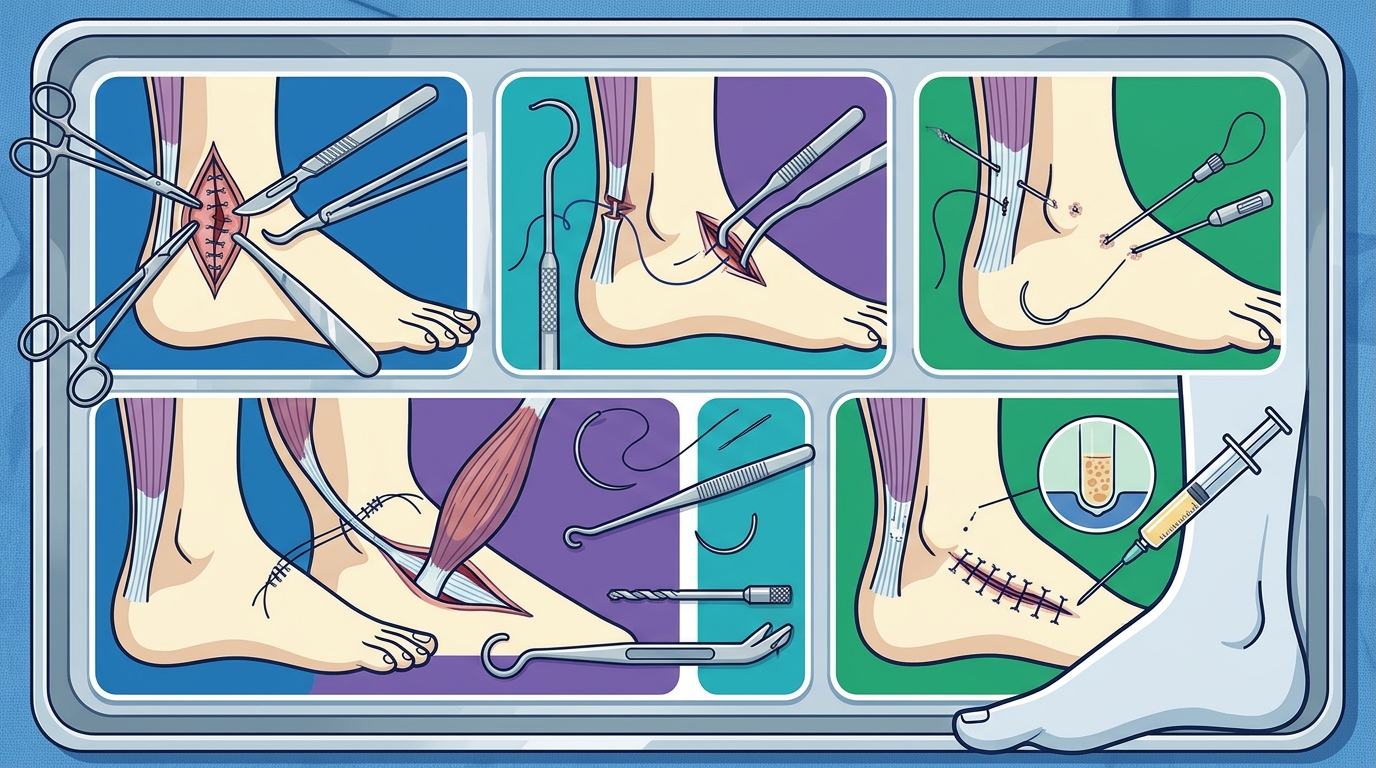
5. Staged Reconstruction for Chronic Tears
Multi-stage procedures address long-standing tears that have lost tissue length. If a tear has been present for months or years, the tendon ends may have pulled apart too far to touch. In these cases, a staged reconstruction is necessary. This involves using grafts to bridge the gap and restore length, often requiring multiple surgeries over several months to achieve a functional result.
Choosing the Right Approach
The best option for you depends on the age of your injury and your physical goals. Acute tears generally respond well to primary or augmented repairs, while chronic cases require reconstruction. A thorough clinical exam and imaging are essential to determine which technique will provide the most durable outcome for your specific anatomy.
Frequently Asked Questions
How long does Achilles tendon repair surgery take?
Most Achilles tendon repair surgeries take between 45 minutes and two hours. The exact duration depends on the complexity of the tear and whether grafts are required.
What is the recovery timeline for Achilles repair?
Recovery typically takes 4 to 6 months for full return to activity. Patients usually wear a boot for 6 to 8 weeks and begin physical therapy gradually to rebuild strength.
Can I return to running after Achilles tendon repair?
Yes, most patients can return to running after completing a structured rehabilitation program. This usually occurs 6 to 9 months post-surgery, depending on healing progress.
Is minimally invasive repair better than open repair?
Both techniques have high success rates. Minimally invasive repair may offer less initial pain, while open repair allows for direct visualization. The best choice depends on the specific characteristics of your tear.
Who performs Achilles tendon repair in Dallas and Frisco?
Foot and ankle fellowship-trained orthopedic surgeons, such as those at Leroy Butler, DO PLLC, specialize in these complex lower extremity procedures.