
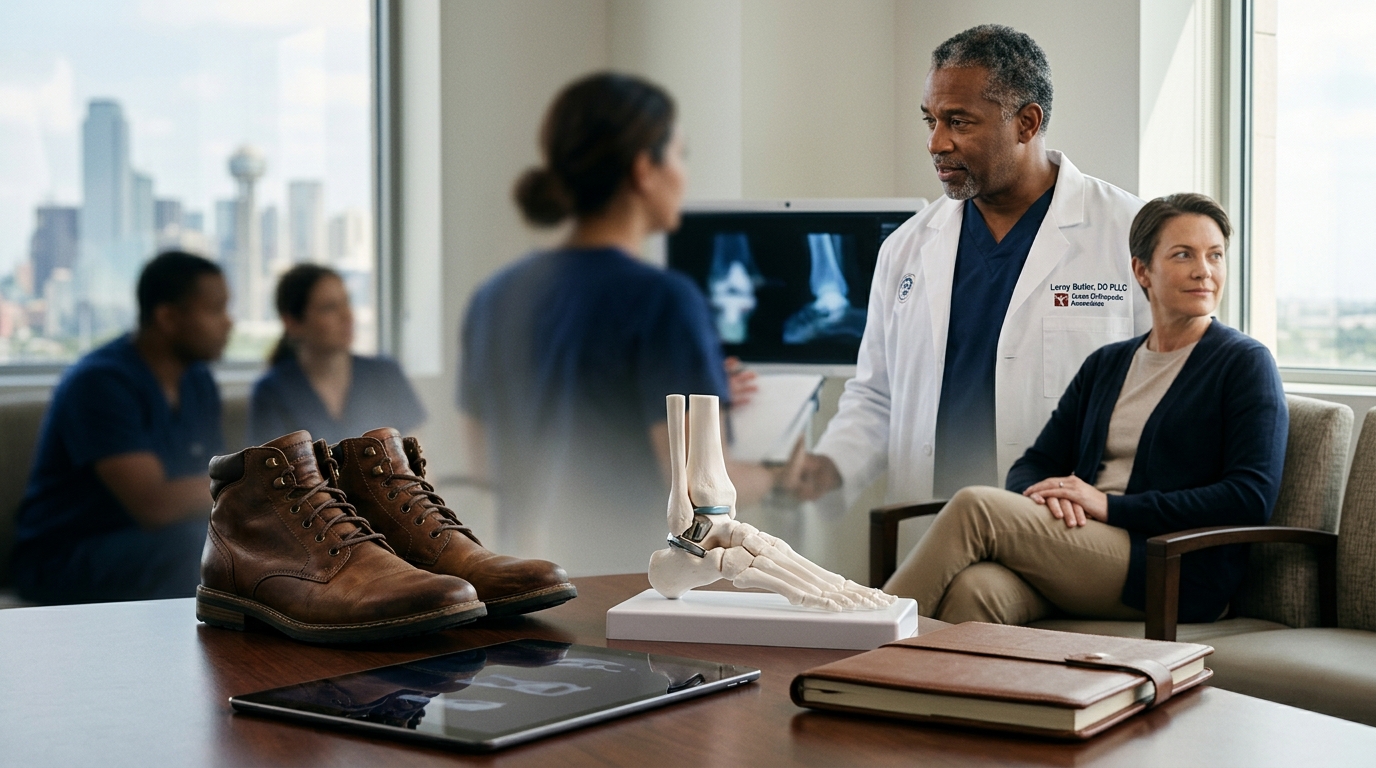
Total ankle replacement is a specialized orthopedic procedure designed to relieve pain and restore mobility for patients with severe ankle arthritis. At Leroy Butler, DO PLLC, our fellowship-trained approach ensures that every stage of the surgical process is calibrated to your specific joint anatomy. Understanding these steps helps you prepare for the procedure and set realistic expectations for your recovery timeline.
1. Preoperative Imaging and Planning
Accurate 3D mapping determines implant sizing and alignment. Before any incision is made, the surgeon reviews high-resolution imaging to assess bone quality and joint space. This phase often involves CT scans to create a precise map of the talus and tibia. The goal is to select the correct implant size and plan the exact bone resection angles to ensure long-term stability. For additional details, review the Notice of Privacy Practices.
2. Anesthesia and Positioning
Proper positioning protects the nerve supply during the operation. The patient is placed in a supine position with the leg elevated on a bolster. Anesthesia is administered to ensure complete comfort and muscle relaxation. This specific positioning allows the surgeon optimal access to the front of the ankle while minimizing pressure on surrounding soft tissues. For additional details, review the Accessibility Statement Leroy Butler.
3. Anterior Incision and Exposure
A direct anterior approach provides clear access to the joint surfaces. The surgeon makes a small incision on the front of the ankle, between the two main shin bones. Careful dissection is performed to identify and protect the anterior tibial nerve and vessels. This exposure allows the surgeon to visualize the entire joint line without excessive trauma to the surrounding ligaments. For additional details, review the .
4. Bone Resection and Preparation
Precise bone removal creates a flat, stable surface for the implant. Specialized guides are used to shave away the damaged cartilage and a thin layer of bone from the tibia and talus. The surgeon must maintain strict alignment to ensure the new joint moves naturally. This step is critical because the implant relies on the remaining bone structure for support and fixation.
5. Implant Insertion and Fixation
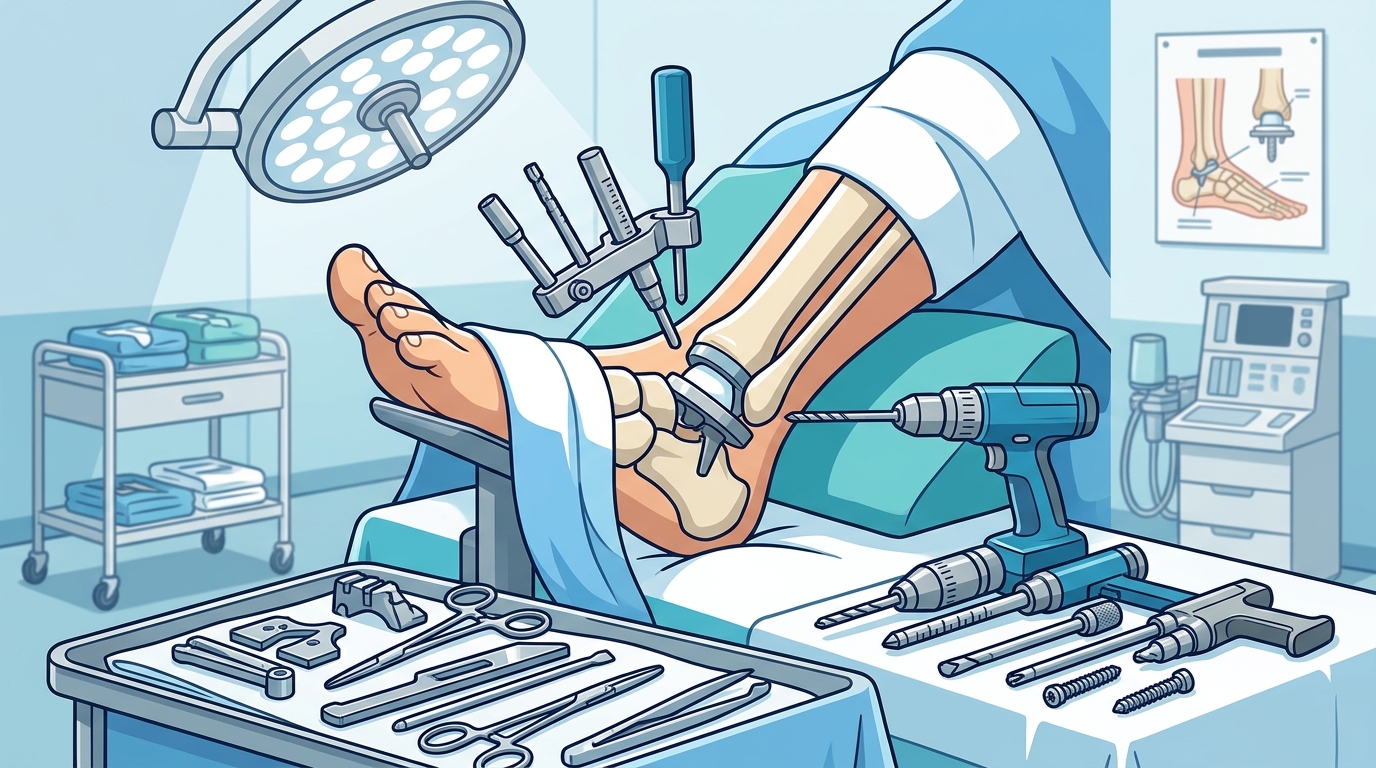
The prosthetic components are secured with cement or screws. The metal and polyethylene components of the total ankle system are inserted into the prepared bone beds. Depending on the specific implant system used, the components may be fixed with bone cement or press-fit with screws. The surgeon checks the range of motion to ensure the new joint articulates smoothly without catching or impingement.
6. Soft Tissue Closure and Drain Placement
Layered closure minimizes wound complications and swelling. The surgeon closes the incision in layers, repairing the joint capsule and skin with sutures or staples. A small drain may be placed to remove excess fluid from the surgical site. This step is essential for reducing postoperative swelling and preventing hematoma formation, which can complicate healing.
7. Immediate Postoperative Immobilization
Strict non-weight bearing protocols protect the new implant. The ankle is immediately placed in a splint or cast to maintain proper alignment. Patients are instructed to keep the leg elevated and apply ice to manage swelling. This initial phase of immobilization is crucial for allowing the bone to heal around the implant and for the soft tissues to settle.
Frequently Asked Questions
How long does total ankle replacement surgery take?
The surgery typically takes between one and two hours, depending on the complexity of the bone preparation and the specific implant system used.
Is total ankle replacement a permanent solution?
While the implant is designed to last for many years, it is not considered a lifetime solution. Most implants last 10 to 15 years, after which a revision surgery may be necessary if the implant wears out or loosens.
What is the difference between total ankle replacement and fusion?
Total ankle replacement preserves joint motion, whereas ankle fusion eliminates motion by joining the bones together. Replacement is generally preferred for patients who value mobility, while fusion is often recommended for younger, high-impact athletes.
How soon can I walk after the surgery?
Patients are typically non-weight bearing for the first six to eight weeks. Walking with crutches or a walker usually begins after the initial healing phase, with a gradual transition to normal gait over several months.
Who is a good candidate for this procedure?
Ideal candidates are patients with severe arthritis who have failed conservative treatments like physical therapy and injections. The surgeon evaluates bone quality and overall health to determine if the patient can adhere to the postoperative restrictions.