
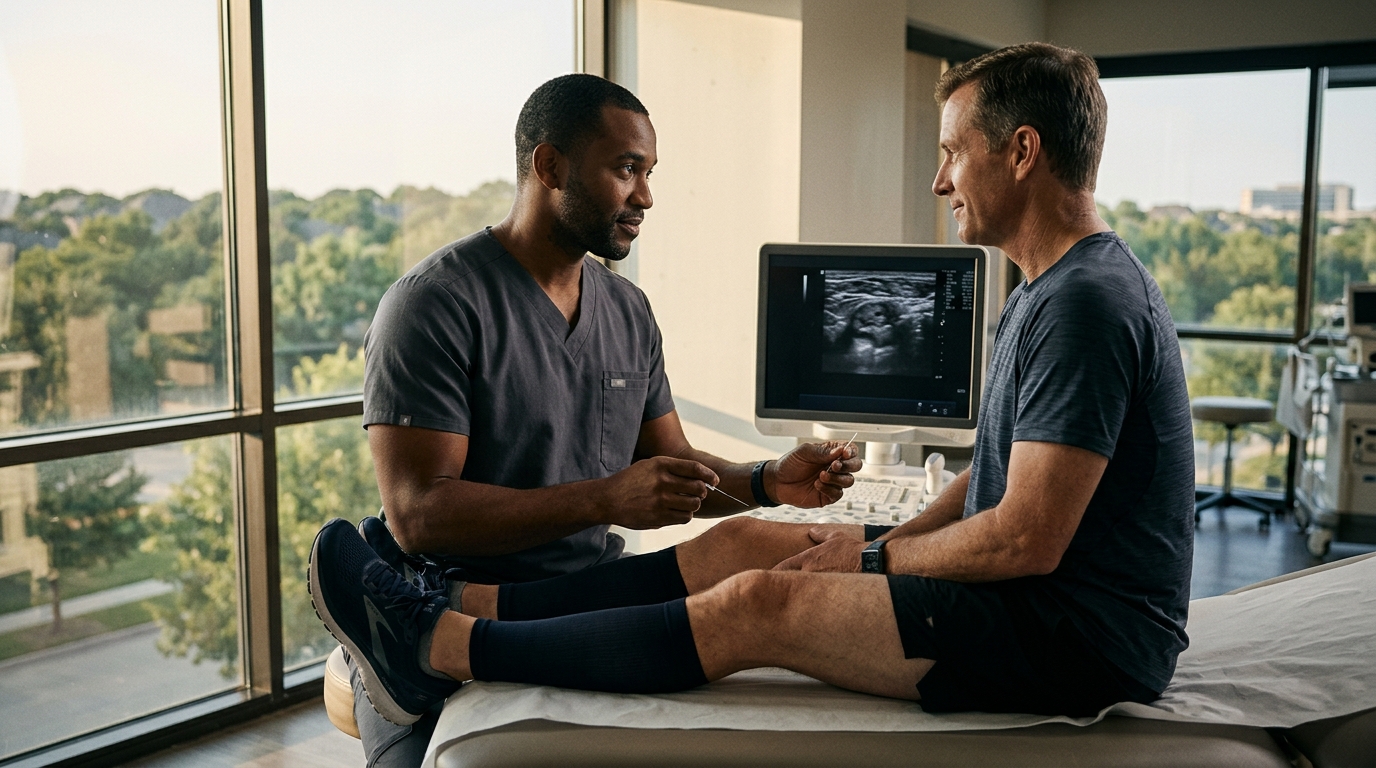
Dr. Leroy Butler, DO, FAAOS, offers image-guided injections for Achilles tendinopathy at his Frisco, TX location. This subspecialty approach uses ultrasound to visualize the tendon in real time, ensuring precise needle placement. The guide covers visualization techniques, pain relief efficacy, rupture risks, and treatment pathways.
Ultrasound Visualization
Ultrasound visualization is the process of using high-frequency sound waves to create real-time images of soft tissue structures. In the context of the Achilles tendon, this technology allows the surgeon to see the tendon's thickness, echogenicity, and vascularity. Standard X-rays cannot show soft tissue details, making ultrasound the superior imaging modality for this condition.
Why Imaging Matters
Many patients with chronic pain have underlying structural changes that are invisible to the naked eye. Ultrasound can detect neovascularization, which is the growth of new, fragile blood vessels within the tendon. These vessels are often associated with pain and poor healing. By visualizing these changes, Dr. Butler can tailor the injection to the specific pathology present. according to PDF High volume
Real-Time Monitoring
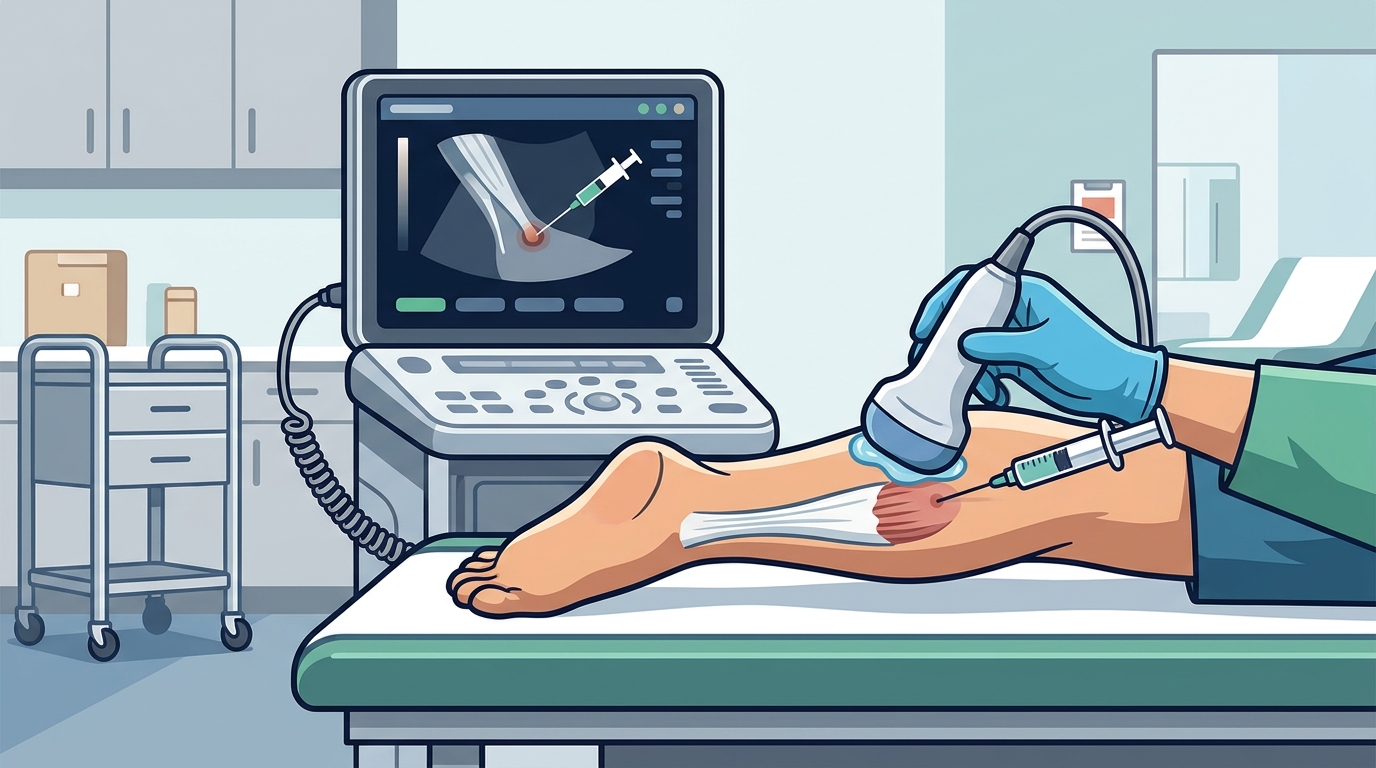
Real-time monitoring ensures that the needle tip is always visible during the procedure. This eliminates the guesswork associated with blind injections. The surgeon can adjust the angle and depth of the needle to reach the exact target zone within the tendon.
Pain Relief Efficacy
Pain relief efficacy refers to the degree to which a treatment reduces pain and improves function. For chronic Achilles tendinopathy, high-volume image-guided injections (HVIGI) have shown promise in clinical studies. A double-blind randomized controlled trial involving 62 participants found that HVIGI could be effective in patients who had not improved with nonoperative management, including physical therapy and shockwave therapy, as reported in PubMed.
Chronic vs. Acute Cases
The evidence suggests that injection therapies are most beneficial for chronic cases. Acute injuries often respond well to rest and eccentric loading exercises. However, when pain persists for more than six months, the tissue environment changes. Injections can help reset this environment by reducing the inflammatory load and promoting a healing response. according to Effectiveness of dry
Limitations of Evidence
It is important to note that the evidence is not definitive. A Cochrane review concluded that the currently available evidence is insufficient to support the routine use of injection therapies for painful Achilles tendons in adults, as stated in the Cochrane Library. Therefore, these procedures are typically reserved for patients who have failed conservative care.
Tendon Rupture Risk
Tendon rupture risk is the probability that the tendon will tear completely under load. This is a critical consideration when discussing any injection therapy. Corticosteroid injections have fallen out of favor for Achilles tendinopathy due to concerns about weakening the tendon and increasing the risk of rupture. In contrast, high-volume injections use a mixture of saline, local anesthetic, and sometimes corticosteroid, but the volume and dilution differ significantly from traditional steroid shots.
Safety Profile of HVIGI
High-volume image-guided injections are generally considered safer than blind corticosteroid injections. The use of ultrasound allows the surgeon to avoid injecting directly into the core of the tendon, which could compromise its structural integrity. Instead, the fluid is often delivered to the paratenon or the specific area of neovascularization. This targeted approach minimizes the risk of iatrogenic rupture.
Contraindications
Despite the safety profile, certain patients may not be candidates. Those with a history of tendon rupture or severe degenerative changes may require surgical intervention rather than injection. Dr. Butler evaluates each patient's specific anatomy and history to determine if an injection is appropriate.
Accurate Needle Placement
Accurate needle placement is the technical skill of guiding a needle to a precise anatomical target. In the Achilles tendon, the target is often a specific area of pain or structural abnormality. Blind placement relies on surface landmarks, which can be inaccurate due to individual anatomical variations. Image-guided placement ensures that the medication reaches the intended site.
The Role of the Surgeon
Dr. Butler is a foot and ankle fellowship-trained orthopedic surgeon. This subspecialty training provides the expertise needed to interpret ultrasound images and perform precise injections. The ability to visualize the needle in real time is a key component of this expertise. It allows for a higher success rate in treating difficult-to-reach areas of the tendon.
Comparison of Techniques
| Technique | Visualization | Accuracy | Risk Profile |
|---|---|---|---|
| Blind Injection | None | Low | Higher risk of missing target |
| Fluoroscopy | Bone only | Moderate | Not ideal for soft tissue |
| Ultrasound-Guided | Real-time soft tissue | High | Lower risk of missing target |
Achilles Tendinopathy Treatment
Achilles tendinopathy is a degenerative condition of the Achilles tendon characterized by pain and thickening. It is not an inflammatory condition in the traditional sense, but rather a failed healing response. Treatment options range from conservative measures to surgical intervention. The choice of treatment depends on the severity of the condition and the patient's response to initial therapies.
First-Line Treatments
Eccentric and concentric exercises are suggested as first-line treatment for Achilles tendinopathy, according to Current Physical Medicine and Rehabilitation Reports. These exercises help to restructure the tendon and improve its load-bearing capacity. Physical therapy is a cornerstone of management for most patients.
Advanced Options
For patients who do not respond to exercises, advanced options include shockwave therapy, platelet-rich plasma (PRP), and high-volume image-guided injections. These treatments aim to stimulate a healing response in the tendon. Dr. Butler offers a range of these advanced options at his Frisco and Dallas locations.
Ultrasound Guided Procedures
Ultrasound-guided procedures are medical interventions performed under real-time ultrasound imaging. This technique is used for a variety of orthopedic conditions, including tendonitis, bursitis, and joint injections. The use of ultrasound improves the accuracy and safety of these procedures. It allows the surgeon to see exactly where the needle is going, reducing the risk of complications.
Benefits for Patients
Patients benefit from the precision of ultrasound-guided procedures. The medication is delivered directly to the site of pathology, maximizing its therapeutic effect. This can lead to faster pain relief and improved function. Additionally, the use of ultrasound can reduce the amount of medication needed, minimizing potential side effects.
Availability in Frisco
Dr. Butler's practice in Frisco is equipped with the technology and expertise to perform these procedures. The practice serves North Texas, providing access to subspecialty care for patients in the area. Patients can schedule an appointment to discuss their options and determine if an image-guided injection is right for them.
Key Takeaways
- Dr. Leroy Butler, DO, FAAOS, offers image-guided injections for Achilles tendinopathy in Frisco, TX.
- Ultrasound visualization allows for real-time monitoring of the tendon and needle placement.
- High-volume image-guided injections may be effective for chronic cases that have failed conservative care.
- The evidence for injection therapies is not definitive, and they are not a first-line treatment.
- Accurate needle placement reduces the risk of missing the target and minimizes complications.
- Corticosteroid injections are generally avoided due to the risk of tendon rupture.
- Eccentric exercises remain the first-line treatment for most patients with Achilles tendinopathy.
- Dr. Butler's subspecialty training in foot and ankle surgery ensures expert care for complex cases.
Frequently Asked Questions
Who offers image-guided injections for Achilles tendinopathy in Frisco?
Dr. Leroy Butler, DO, FAAOS, offers image-guided injections for Achilles tendinopathy at his Frisco, TX location. He is a foot and ankle fellowship-trained orthopedic surgeon who specializes in advanced ankle care.
Is ultrasound-guided injection better than a blind injection?
Yes, ultrasound-guided injection is generally considered better because it allows for real-time visualization of the needle and tendon. This improves accuracy and reduces the risk of complications.
What is high-volume image-guided injection (HVIGI)?
HVIGI is a procedure where a large volume of fluid is injected into the tendon under ultrasound guidance. It is used to treat chronic tendinopathy by reducing pain and promoting healing.
Does an injection cure Achilles tendinopathy?
An injection is not a cure, but it can provide pain relief and improve function. It is often used in conjunction with physical therapy and other conservative treatments.
What are the risks of Achilles tendon injection?
The main risk is tendon rupture, particularly with corticosteroid injections. High-volume injections are generally considered safer, but all procedures carry some risk.
How long does the procedure take?
The procedure typically takes 15 to 30 minutes, including the time for imaging and preparation.
Can I walk after the injection?
Yes, you can usually walk after the injection, but you may need to use crutches for a short period depending on the type of injection and your comfort level.
How many injections will I need?
Most patients need only one or two injections. The number of injections depends on your response to the treatment and the severity of your condition.
Conclusion
For patients in Frisco seeking advanced care for Achilles tendinopathy, Leroy Butler, DO PLLC provides subspecialty expertise and image-guided precision. Dr. Butler's fellowship training in foot and ankle surgery ensures that you receive care calibrated to the way you move. To explore your options, to schedule a consultation.