
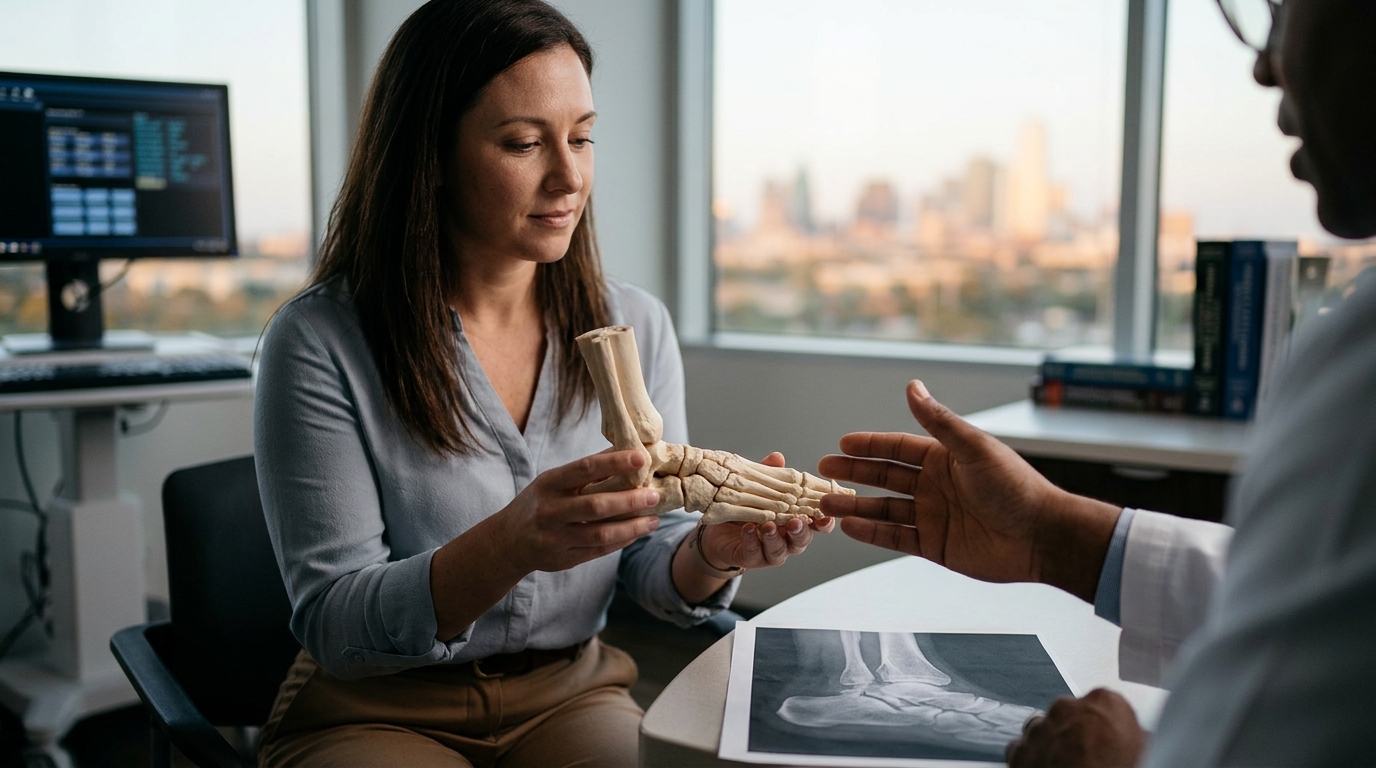
Dr. Leroy Butler, DO, FAAOS, is a foot and ankle fellowship-trained orthopedic surgeon who treats complex fractures in Frisco and Dallas. This guide explains how subspecialty training, trauma access, and surgical precision reduce complications. It covers the specific expertise required for difficult bone injuries and how to choose the right local provider.
Surgical Complication Reduction
Complex fractures carry a higher risk of non-union, infection, and hardware failure. Reducing these risks requires precise anatomical alignment and stable fixation. Surgical complication reduction is the process of minimizing adverse outcomes through meticulous technique and appropriate implant selection. In the foot and ankle, the bones are small and the soft tissue envelope is thin. This makes standard orthopedic techniques less effective for severe injuries. For additional details, review the .
The Role of Image-Guided Precision
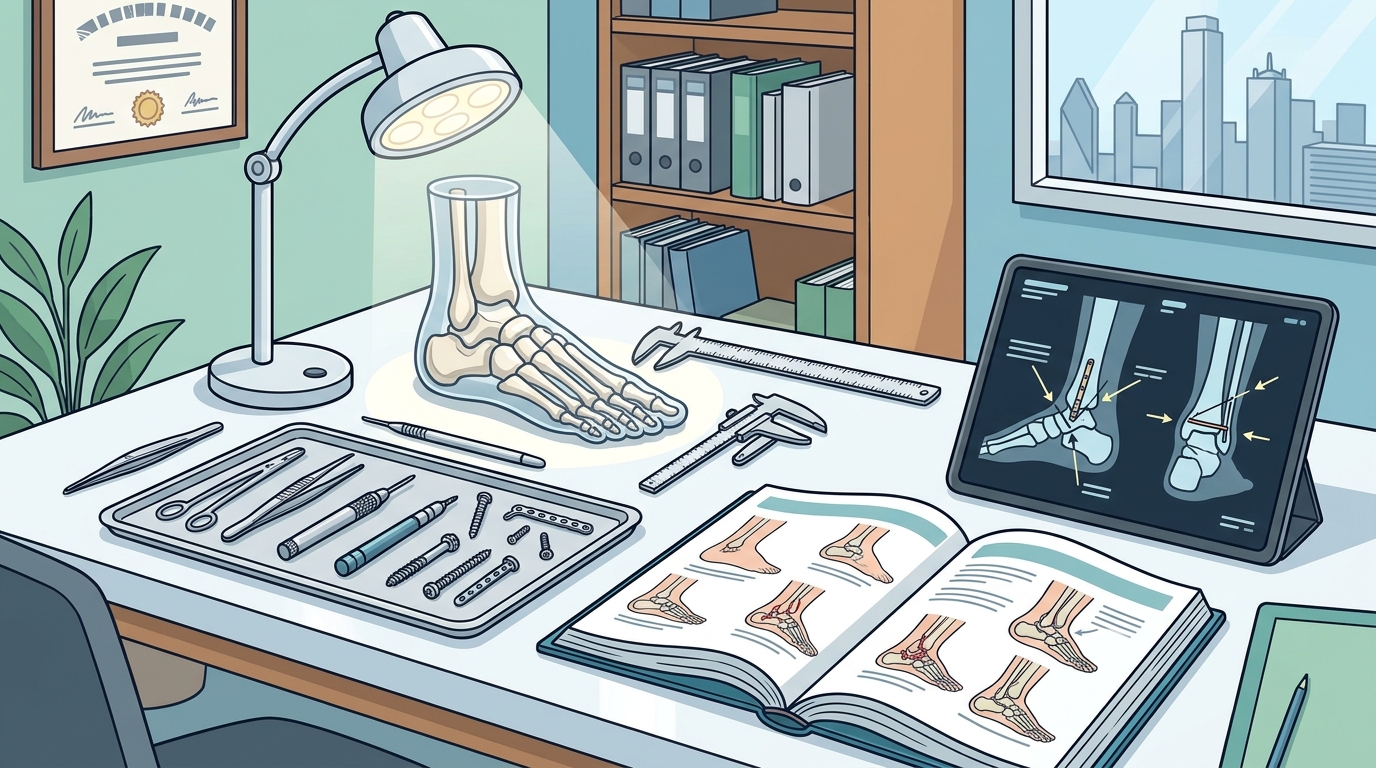
Modern orthopedic surgery relies on intraoperative imaging to verify bone position. Dr. Butler utilizes image-guided techniques to ensure that fracture fragments are reduced to their native anatomy. This precision is critical for weight-bearing joints. Even a millimeter of malalignment can alter joint mechanics and lead to early arthritis. By focusing on exact reduction, the surgeon protects the long-term function of the joint.
Soft Tissue Considerations
The skin and muscles around the ankle are under tension after a fracture. Aggressive surgery can compromise blood supply to the skin, leading to wound breakdown. A subspecialist evaluates the soft tissue status before choosing a surgical approach. Sometimes, staged treatment is necessary to allow the soft tissues to heal before definitive fixation. This conservative approach to the soft tissue envelope significantly lowers the rate of postoperative wound complications.
Trauma Center Access
Severe foot and ankle injuries often occur in high-energy accidents, such as car crashes or falls from height. These patients require immediate stabilization. Trauma center access is the availability of emergency surgical capabilities for acute, life-threatening, or limb-threatening injuries. In North Texas, major trauma centers are located in Dallas and Fort Worth. Frisco is strategically positioned near these resources, allowing for rapid transfer of critically injured patients.
The Frisco and Dallas Corridor
Frisco is part of the DFW Metroplex, which hosts several Level I and Level II trauma centers. For a patient in Frisco with a complex fracture, the initial stabilization often happens at a nearby emergency department. The orthopedic team then takes over for definitive care. Dr. Butler’s practice in Frisco and Dallas facilitates this transition. Patients can receive emergency care locally and then continue with specialized orthopedic management without leaving the region.
Coordinated Care Pathways
Effective trauma care requires communication between emergency physicians and orthopedic surgeons. A coordinated pathway ensures that the patient is not lost in the system. The orthopedic team reviews imaging and clinical status to plan the next steps. This continuity of care is vital for complex fractures where timing is critical. Delays in definitive fixation can lead to increased pain and higher complication rates.
Complex Fracture Management
Not all fractures are simple breaks. Complex fracture management is the treatment of injuries involving multiple bone fragments, joint surface disruption, or significant soft tissue damage. These injuries require a surgeon who has seen many of them. General orthopedic surgeons may treat simple ankle sprains and minor fractures, but complex cases demand subspecialty expertise. The complexity of the injury dictates the complexity of the surgical plan.
Open vs. Closed Reduction
Reconstructive Options
In cases where bone is missing or the joint is severely damaged, reconstruction may be necessary. This can involve bone grafting or the use of specialized implants. In extreme cases, a total ankle replacement might be considered for older patients with severe arthritis and fracture. The decision depends on the patient’s age, activity level, and bone quality. A fellowship-trained surgeon is best equipped to navigate these complex decision trees.
Fellowship Training Benefits
Orthopedic surgery is a broad field. A general orthopedic surgeon completes a five-year residency. Fellowship training is an additional one to two years of specialized education in a specific subspecialty, such as foot and ankle. This extra training provides deep expertise in the unique anatomy and biomechanics of the lower extremity. It is the primary differentiator between a generalist and a subspecialist.
Volume and Experience
Fellowship-trained surgeons operate on a higher volume of foot and ankle cases. This repetition builds skill and intuition. They have likely seen rare fracture patterns that a generalist may encounter only once in their career. This experience translates into better surgical outcomes and fewer complications. When you choose a fellowship-trained surgeon, you are choosing someone who has dedicated their career to this specific part of the body.
Board Certification and Fellowship
Dr. Butler is board-certified and a Fellow of the American Academy of Orthopaedic Surgeons (FAAOS). He also completed a fellowship in foot and ankle surgery. This combination of credentials ensures a high standard of care. The FAAOS designation indicates that the surgeon has met rigorous standards of education and practice. For patients with complex injuries, these credentials provide peace of mind that the surgeon is qualified to handle the case.
Local Frisco Specialists
Practice Locations and Accessibility
Leroy Butler, DO PLLC, operates in two locations: Frisco and Dallas. The Frisco office is located in Professional Building #1, Suite 115. The Dallas office is at 12228 N Central Expy, Suite 390. This dual-location model allows patients to choose the site that is most convenient for them. Both offices are staffed by experienced medical professionals who are dedicated to patient care. The practice is open Monday through Friday, from 8:00 AM to 5:00 PM.
Why Subspecialty Matters in Frisco
Frisco is a growing community with a high level of physical activity. Many residents are athletes or active professionals who are at risk for sports-related injuries. A subspecialist in Frisco can provide timely care for these patients. Dr. Butler’s focus on foot and ankle surgery means that he is up to date with the latest techniques and research. This local expertise ensures that patients receive the best possible care without the hassle of long-distance travel. according to 55 Sports Injury
Key Takeaways
- Complex foot and ankle fractures require subspecialty expertise to minimize complications.
- Fellowship training provides the deep knowledge and high case volume needed for difficult injuries.
- Trauma center access in the DFW Metroplex ensures rapid stabilization for high-energy injuries.
- Image-guided surgery and soft tissue management are critical for reducing postoperative risks.
- Dr. Leroy Butler is a fellowship-trained orthopedic surgeon with offices in Frisco and Dallas.
- Local specialists offer convenience and continuity of care for patients in the Frisco area.
- Choosing a board-certified, fellowship-trained surgeon is the best way to ensure high-quality care.
Frequently Asked Questions
Who treats complex foot and ankle fractures in Frisco, TX?
Dr. Leroy Butler, DO, FAAOS, is a foot and ankle fellowship-trained orthopedic surgeon who treats complex fractures in Frisco. He has a practice at 5575 Warren Parkway, Suite 115, Frisco, TX 75034.
What is the difference between a general orthopedic surgeon and a fellowship-trained surgeon?
A general orthopedic surgeon completes a five-year residency. A fellowship-trained surgeon completes an additional one to two years of specialized training in a subspecialty, such as foot and ankle. This extra training provides deeper expertise in specific conditions.
How long does it take to recover from a complex ankle fracture?
Recovery time varies depending on the severity of the fracture and the treatment plan. It can take several months to a year to fully recover. A subspecialist will provide a personalized recovery timeline based on your specific injury.
Do I need surgery for a complex fracture?
Many complex fractures require surgery to restore proper alignment and stability. However, some may be treated with casting or bracing. The decision depends on the specific pattern of the fracture and the patient’s goals.
Where is the Frisco office located?
The Frisco office is located at 5575 Warren Parkway, Suite 115, Professional Building #1, Frisco, TX 75034. It is open Monday through Friday from 8:00 AM to 5:00 PM.
Can I get a second opinion from Dr. Butler?
Yes, Dr. Butler welcomes second opinions. If you have been diagnosed with a complex fracture, you can schedule an appointment to review your imaging and discuss treatment options.
Conclusion
Choosing the right surgeon for a complex foot and ankle fracture is a critical decision. Look for a provider with subspecialty training, high case volume, and local accessibility. Dr. Leroy Butler, DO, FAAOS, offers fellowship-trained expertise in Frisco and Dallas. To schedule an appointment or learn more about your care options, contact Leroy Butler, DO PLLC today.